How to import from Bangladesh: 7 steps for a first order
Short answer: A first order from Bangladesh follows seven steps: shortlist factories, ask for FOB prices, approve samples, sign and pay, production, pre-shipment inspection, then shipping and customs. Plan 4 to 7 months for a first order, not 2. Never skip the inspection, because it is your last good chance to fix problems while you still control the final payment.
Key figures
-
$20–50
Link to this figure: $20–50, Typical cost of a garment sample, often refunded with the bulk orderTypical cost of a garment sample, often refunded with the bulk order
Jun 2025 SourceReady
Link copied -
90–140 days
Link to this figure: 90–140 days, Order-to-delivery time: about 90 days planned, 120–140 with customs, port and unrest delaysOrder-to-delivery time: about 90 days planned, 120–140 with customs, port and unrest delays
May 2025 Apparel Resources
Link copied -
About 40 days
Link to this figure: About 40 days, Sea transit from Bangladesh to EU destinations via transhipment hubsSea transit from Bangladesh to EU destinations via transhipment hubs
2023 (older figure) The Business Standard
Link copied -
$268–298
Link to this figure: $268–298, V-Trust's published price per inspector-day in BangladeshV-Trust's published price per inspector-day in Bangladesh
Oct 2026 V-Trust
Link copied
The trade-off: Bangladesh offers low factory prices and duty-free entry to the UK, EU and Canada, but the price is time. A first order takes months, sea freight alone often takes over a month, and port or customs delays can add weeks more.
Importing from Bangladesh is not complicated, but it is slow. Most first orders follow the same seven steps. The table below gives a rough timeline. It is our planning estimate, built from the sources linked in each step, not a promise from any factory.
| Step | What happens | Rough time (estimate) |
|---|---|---|
| 1–2. Shortlist and quote | Find and check 3–5 factories, compare FOB prices | 2–4 weeks |
| 3. Samples | The factory makes samples and you approve one | 3–6 weeks |
| 4. Contract and payment | Sign, pay a deposit or open an LC; the factory books fabric | 2–6 weeks |
| 5. Production | Cutting, sewing, finishing and packing | 6–9 weeks |
| 6. Inspection | Independent check, then goods move to the port | 1–2 weeks |
| 7. Shipping and customs | Sea freight, then clearance in your country | 5–7 weeks (longer to North America) |
| Total | about 4.5–7 months |
Steps 1 to 4: from shortlist to signed contract
Step 1: Who should be on your shortlist?
Start with three to five factories that already make your product. Then find out who you are really talking to. About 70% of factory orders in Bangladesh still come through buying houses (2025 figure). A buying house is a local firm that takes orders from foreign buyers and places them with factories. That is normal, and a good one can help. But you should know which factory will actually sew your goods. Our five checks before you pay a deposit show how to find out.
For clothing factories, search the International Accord’s public factory list. It shows safety inspection reports and remediation progress for listed factories. A factory that is missing, or shows low progress, needs more questions.
Ask early about the MOQ (minimum order quantity): the smallest order a factory will accept. One small-order factory owner said most Bangladeshi firms want at least 500 pieces from a start-up brand. Some factories take much less, but you will have fewer choices.
Step 2: What price should you ask for?
Send a clear design file and ask for an FOB price. FOB means Free On Board: the price covers the goods and loading them onto the ship in Bangladesh. After that, freight, insurance, import duty and delivery are your costs.
FOB is one of the Incoterms, the standard trade terms that say who pays for what. Bangladesh Bank’s 30 July 2026 export rules allow exporters to use EXW, FCA, FOB, FAS, CFR, CIF, CPT and CIP. Delivered terms such as DDP (Delivered Duty Paid) are not on that list. If a supplier quotes DDP, ask who is really acting as importer and paying the duty.
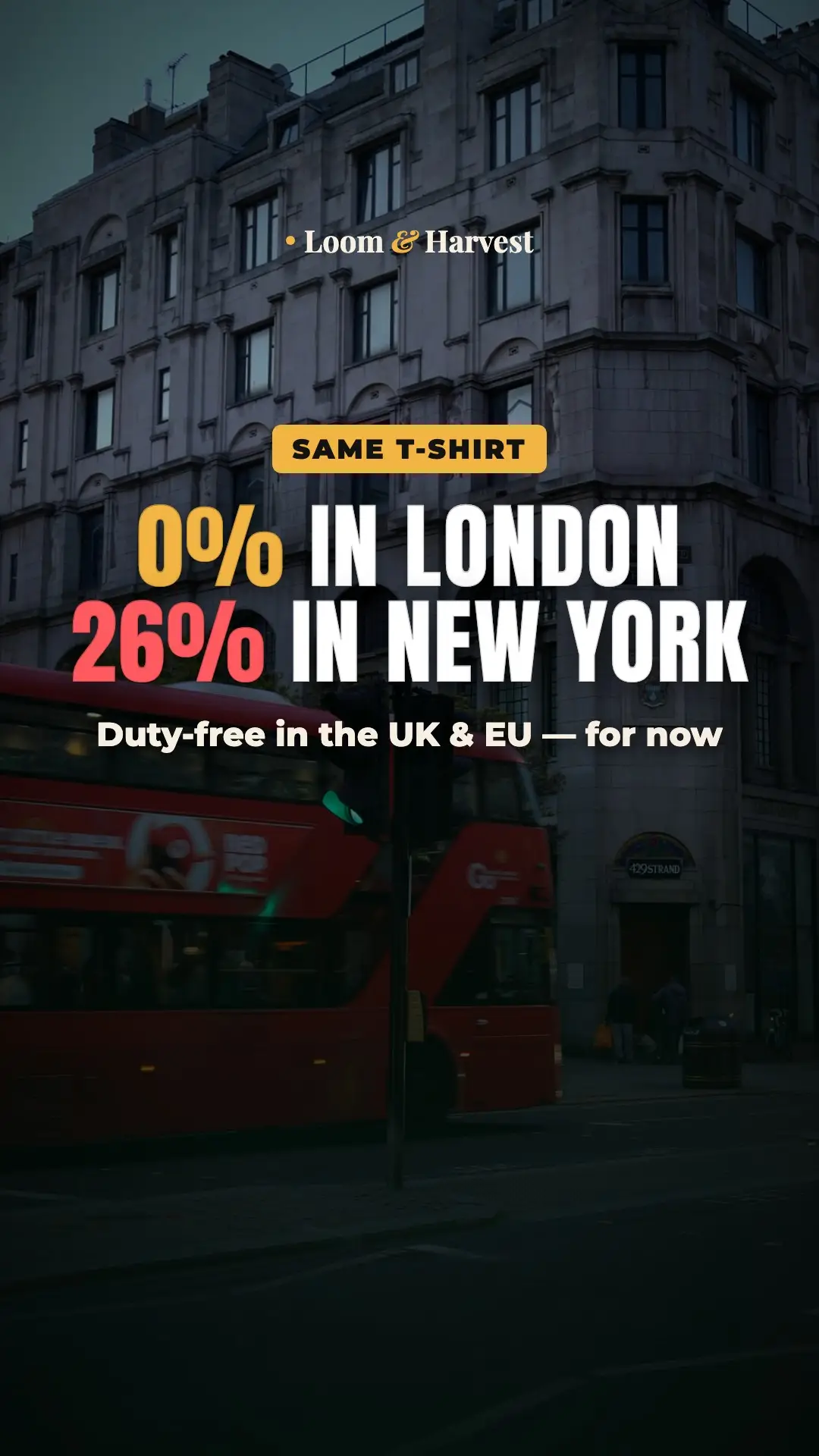
Always compare landed cost, not the FOB price alone. Landed cost is the full cost of getting goods to your warehouse: factory price, freight, insurance, duty and fees. Duty alone changes the picture. A cotton T-shirt from Bangladesh enters the UK duty-free but pays about 26.5% in the US (October 2026). Our guide to import duty by market explains why.
Step 3: How do samples work?
Samples usually cost $20–50, and the fee is often refunded with the bulk order. Ask for the fee and the refund terms in writing. Check the fabric weight, size and colour against what you plan to sell. When you approve a sample, keep it, signed and dated, as the standard for the bulk order.
Step 4: How should you pay?
The contract should state the specification, price, Incoterm, delivery date and what counts as a passed inspection. It should also ban subcontracting without your written consent. There are two common ways to pay:
- Deposit and balance. You pay a deposit, then the balance after a passed inspection. This is common for small orders.
- Letter of credit (LC). Your bank promises to pay the factory once it presents the correct shipping documents. It suits bigger orders, and you can list an inspector’s pass certificate as a required document. The trade-off: LCs often need collateral and carry high fees.
Steps 5 and 6: Why is the inspection not optional?
While the factory produces your order, plan the inspection. A pre-shipment inspection is an independent check of finished goods before they leave. V-Trust publishes a Bangladesh rate of $268–298 per inspector-day (October 2026). Inspectors usually use AQL (Acceptable Quality Limit) sampling: they check a set number of random pieces, and the lot passes only if defects stay within a limit.
Do not skip it. Under Bangladesh Bank rules, a discount claimed on garments after shipment needs approval from a central bank committee. So problems are much easier to fix before the ship leaves. Our guide on why bulk orders differ from samples explains how AQL works.
Step 7: How long do shipping and customs take?
Most containers leave through Chattogram port and change ships at hubs such as Colombo or Singapore. A 2023 report gave about 40 days to EU destinations. That figure is old, so ask a freight forwarder for today’s transit time. To New York, one forwarder lists 45–54 days port to port (September 2026).
Set up your import paperwork before the goods arrive:
- UK: an EORI number for customs declarations.
- Canada: a Business Number with an import-export account, and registration in CARM, the border agency’s online portal for declaring and paying duties.
- US: for sea freight, an Importer Security Filing at least 24 hours before loading. A filing violation can cost $5,000.
Duty-free entry is not automatic. Ask the factory for the proof-of-origin document your market needs.
How long does it really take?
Delivery is often planned at about 90 days. But one industry leader says customs, port and unrest problems can stretch that to 120–140 days (May 2025). Add supplier checks and sampling, and a first order realistically takes 4 to 7 months. Low prices and duty-free access are the advantage. Time is the cost.
What this means for your order
Count back at least seven months from your launch date for a first order. Get quotes from three to five factories, compare landed cost by market, and tie the final payment to a passed inspection. If you want someone on the ground, Loom & Harvest does factory checks, sample coordination and pre-shipment inspections for fixed fees. You can send an enquiry with your product, quantity and target market.
Common questions
How long does a first order from Bangladesh take?
Plan 4 to 7 months from first contact to goods in your warehouse. Delivery is often planned at about 90 days, but customs, port and unrest problems can stretch it to 120–140 days.
How much do samples from Bangladesh cost?
Simple garment samples usually cost $20–50, and the fee is often refunded when you place the bulk order. Ask for the fee and the refund terms in writing before you pay.
What does an FOB price include?
FOB (Free On Board) covers the goods and loading them onto the ship in Bangladesh. Freight, insurance, import duty and delivery are your costs, so compare landed cost, not the FOB price alone.
Should I pay a deposit or use a letter of credit?
For small orders, a deposit with the balance paid after a passed inspection is common. For larger orders, a letter of credit gives more protection, especially if it lists a passed inspection certificate as a required document, but it costs bank fees.
Sources
This guide is correct as of . If a figure has changed since, tell us.
- SourceReady sourceready.com
- Apparel Resources apparelresources.com
- The Business Standard (sea transit) tbsnews.net
- The Business Standard (small-order factories) tbsnews.net
- International Accord internationalaccord.org
- Bangladesh Bank (FEPD-1 Circular No. 26, 30 July 2026) bb.org.bd
- TariffsTool tariffstool.com
- The Daily Star (UK market access) thedailystar.net
- V-Trust eng.v-trust.com
- AirliftUSA (shipping routes) airliftusa.com
- GOV.UK (EORI) gov.uk
- Canada Border Services Agency (CARM) canada.ca
- GHY International (ISF) ghy.com