Bangladesh's green garment factories: what a LEED score tells a buyer
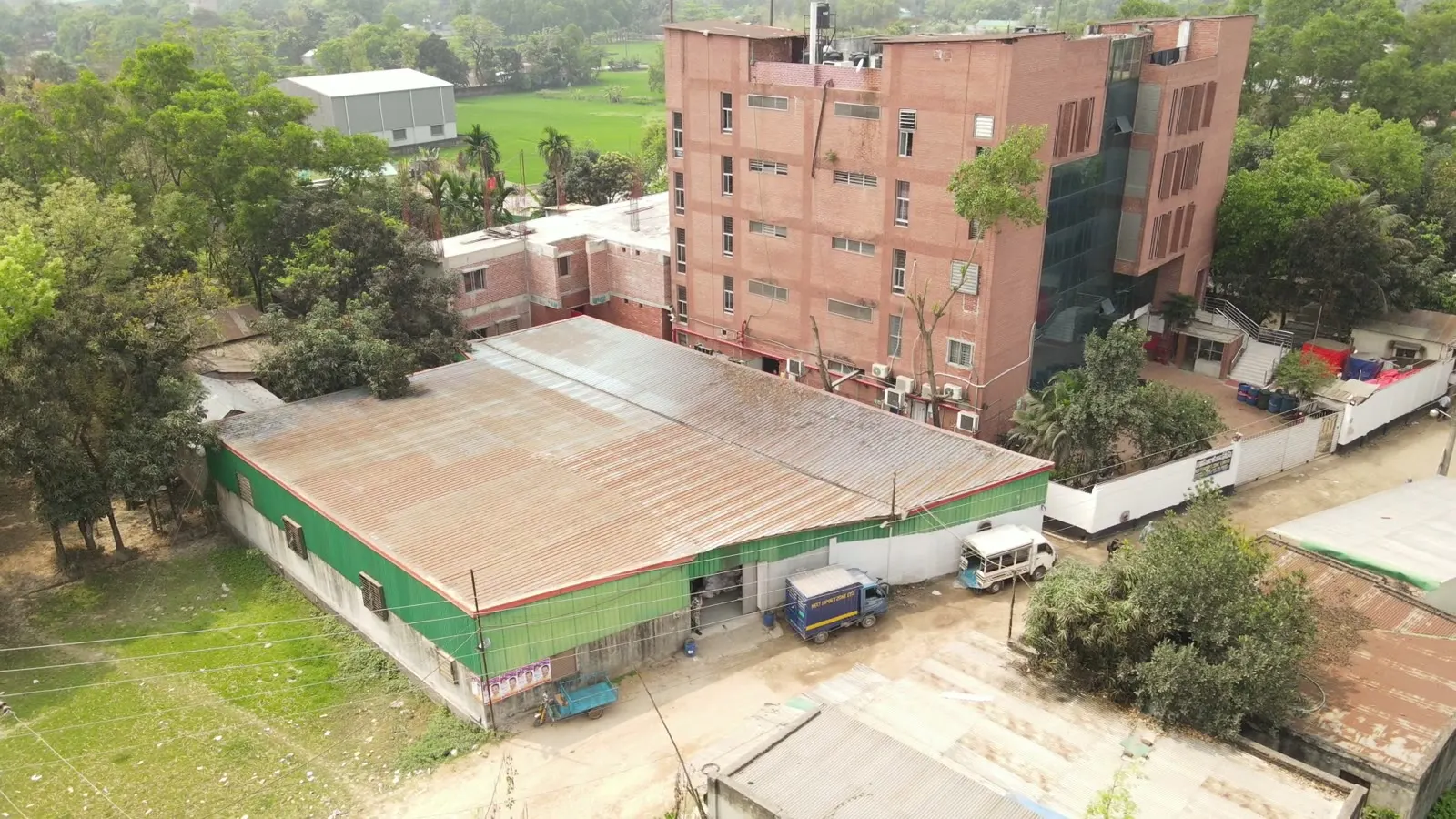
Short answer: Bangladesh has more LEED-certified garment and textile factories than any other country: 302 on 20 November 2026, 134 of them Platinum. HAMS Garments in Gazipur holds the highest score reported for a garment factory, 108 out of 110. LEED rates the building's energy, water, materials, site and indoor air. It does not check wages, product quality or the chemicals used to make your goods.
Key figures
-
302
LEED-certified garment, textile and accessories factories in Bangladesh, the most of any country
20 Nov 2026 The Business Standard (count compiled by Bangladesh Apparel Voice)
Link to this figure: 302, LEED-certified garment, textile and accessories factories in Bangladesh, the most of any country Link copied -
134
Of those 302, the number rated Platinum, LEED's top level (148 Gold, 16 Silver, 4 Certified)
20 Nov 2026 The Business Standard
Link to this figure: 134, Of those 302, the number rated Platinum, LEED's top level (148 Gold, 16 Silver, 4 Certified) Link copied -
108 of 110
HAMS Garments' LEED Platinum score, the highest reported for a garment factory
7 Jan 2026 USGBC LEED project directory
Link to this figure: 108 of 110, HAMS Garments' LEED Platinum score, the highest reported for a garment factory Link copied -
80+
Points needed for LEED Platinum (Gold 60-79, Silver 50-59, Certified 40-49)
Nov 2026 U.S. Green Building Council
Link to this figure: 80+, Points needed for LEED Platinum (Gold 60-79, Silver 50-59, Certified 40-49) Link copied -
About 70%
How far wages fell below a living-wage estimate in 8 LEED factories studied; none had a union
Feb 2026 Clean Clothes Campaign (FAIR study)
Link to this figure: About 70%, How far wages fell below a living-wage estimate in 8 LEED factories studied; none had a union Link copied
The trade-off: LEED rates the building, not the people or the product. A Platinum factory can still pay far below a living wage, and the rating says nothing about sewing quality or the dyes in your fabric. Green buildings cost owners 10-20% more to build, yet owners say buyers prefer them but rarely pay more.
Still pending
- New factories are certified in batches every few weeks, so the count changes. On 22 November 2026, BGMEA's own environment page said 295, while the latest press count (20 November 2026) was 302.
- Reports in 2026 disagree on how many of the world's 100 highest-rated LEED factories are in Bangladesh (from 52 to 69), so we do not quote a number.
Many people picture Bangladesh’s garment industry as dark, crowded sheds. Yet the country has more green-certified garment factories than anywhere else, and one of them holds the highest green-building score reported for any garment factory. This guide explains what that score means, what it leaves out, and how to check a factory’s claim yourself in a few minutes.
How many green factories does Bangladesh have, and who scored highest?
The usual measure is LEED (Leadership in Energy and Environmental Design), a rating for buildings run by the US Green Building Council (USGBC).
After 12 more factories were certified, Bangladesh had 302 LEED-certified factories, 134 of them Platinum (The Business Standard, 20 November 2026), the most of any country. The trade publication Bangladesh Apparel Voice compiled that count. It includes garment, textile and accessories factories, such as trims makers. Official pages lag behind: BGMEA’s environment page said 295 when we checked on 22 November 2026. USGBC itself wrote in June 2021 that Bangladesh had “the greatest number of LEED-certified factory buildings” in the world.
The top score belongs to HAMS Garments Ltd in Sreepur, Gazipur. Its USGBC directory page shows Platinum with 108 points, certified on 7 January 2026. BSS and The Financial Express (both 29 January 2026) reported it as the highest score recorded worldwide in its category, and BSS still listed it first on 23 August 2026. USGBC does not publish a ranking, so “highest reported” is the honest wording.
Keep the scale in mind. The Mapped in Bangladesh factory map showed 3,320 factories on 22 November 2026. Against that, 302 is about 9 in 100. The two lists count slightly different things, but under 1 in 10 factories is LEED-certified.
What is LEED, and how do the points work?
LEED is a points system. A building’s owner claims credits, and GBCI (Green Business Certification Inc.) reviews the evidence before awarding points, USGBC explains. The levels are:
| Level | Points |
|---|---|
| Certified | 40-49 |
| Silver | 50-59 |
| Gold | 60-79 |
| Platinum | 80 or more |
There are several LEED rating systems. BD+C: New Construction rates a new building as designed and built. O+M: Existing Buildings rates a building already in use and how it is run. HAMS was rated under O+M, out of 110 available points. Its credit categories cover location and transport, the site, water, energy, materials and waste, and indoor environmental quality (air, light and comfort inside), plus innovation and regional priority.
LEED is one scheme among several, and it is American. A Bangladeshi architecture professor told Mongabay (24 August 2026) that the country depends too much on a system designed around the US climate. Across all building types, Bangladesh is not a LEED leader: USGBC’s 2025 ranking outside the US (2 February 2026) is led by mainland China, then India. The record is about factories.
Why did Bangladesh build so many after 2013?
The first came before the disasters. Vintage Denim Studio became Bangladesh’s first LEED-certified factory in July 2012.
Then the Tazreen factory fire in 2012 and the Rana Plaza collapse on 24 April 2013, which killed 1,134 people and injured nearly 2,600, shook the industry. Western shoppers turned away, and safety inspections by the Accord and the Alliance (two brand-led safety programmes) followed. The Daily Star reports (29 March 2024) that their recommendations helped owners build new, safer factories, and many chose to build green to win back buyers. By June 2021 USGBC counted more than 140 LEED garment factories. Now there are 302.
Running costs matter too. Factory owners in BSS’s August 2026 report point to energy and water savings and to pressure from buyers. The trade-off: certified green buildings cost 10-20% more to build (Mongabay, August 2026), and a Platinum unit nearly 40% more (The Daily Star, 2024). Owners told Mongabay that buyers prefer green factories but do not pay more.
What does LEED tell a buyer, and what does it not?
A LEED certificate tells you that a third party checked the building’s energy, water, waste, site and indoor air against a published standard. A high O+M score shows a factory that measures these things and runs the building to a plan. That is useful.
It does not tell you four things.
- Wages and rights. A FAIR study, published by the Clean Clothes Campaign on 11 February 2026, looked at 8 LEED factories. Wages were about 70% below a living-wage estimate, and none had a trade union. The study does not name the factories.
- Product quality. No LEED credit category covers sewing quality, sample matching or defect rates. A Platinum factory can still ship a bad bulk order.
- Chemicals in your product. LEED’s categories are about the building. The dyes and finishes used in production fall under other schemes, such as the ZDHC Manufacturing Restricted Substances List, a list of harmful substances to keep out of fashion and footwear production.
- Which building. LEED certifies buildings, not companies. BSS lists Tasnia Fabrics second on 107 points. The USGBC directory shows that the 107 belongs to its admin building; its production building scored 106 (certified 8 May 2025). Both are excellent. But only the building that sews your order counts.
How do you check a factory’s LEED claim?
It takes about five minutes:
- Ask for the exact name and address of the building where your order will be sewn, not only the group name.
- Search the USGBC LEED project directory. Filter the country to Bangladesh and type the company name. On 22 November 2026, the Bangladesh filter returned 361 certified projects, including offices, so make sure your result is a factory.
- Open the project page. Check the rating system, the level, the points and the “last certified on” date.
- Match the address. A group with several sites may have only one building certified.
- If you cannot find it, ask why. Ask for the certificate and the directory link. Then check it yourself.
After that, check the things LEED does not cover: the factory’s entry on the International Accord’s public list, its labour audits, and our five checks before a deposit.
Why it matters to buyers today
A LEED factory can help your sourcing story. It also shows an owner who invests in the building and keeps records. But keep your claim on the building. Say “sewn in a LEED Platinum-certified factory” only if your order really is sewn there, and do not call the product eco-friendly because of it. A large certified factory may also have high minimum orders, so ask early. Our guide to where famous brands’ clothes are made shows how to test such claims. For the wider picture, read why so much clothing is made in Bangladesh and how the garment industry grew. Loom & Harvest does factory checks, sample coordination and inspections for fixed fees; you can send an enquiry.
Common questions
Which garment factory has the highest LEED score?
The highest reported is HAMS Garments Ltd in Sreepur, Gazipur: LEED Platinum with 108 of 110 points, certified on 7 January 2026, as its USGBC directory page shows. USGBC does not publish a ranking, so the record comes from BGMEA and press reports (January to August 2026).
Does a LEED-certified factory pay fair wages?
Not necessarily. LEED rates the building. A FAIR study published by the Clean Clothes Campaign in February 2026 found wages about 70% below a living-wage estimate in 8 LEED factories, and no union in any of them. Check labour audits separately.
Are most Bangladeshi garment factories green?
No. 302 LEED-certified factories (20 November 2026) against the 3,320 factories on the Mapped in Bangladesh map (22 November 2026) is about 9 in 100. The two lists count slightly different things, but the share is under 1 in 10.
Can I call my T-shirt eco-friendly if the factory is LEED Platinum?
Not on that basis alone. The rating covers the building, not your fabric, dyes or shipping. If you mention it, say exactly what it is: your order was sewn in a LEED Platinum-certified building, and only if that is true.
Sources
This guide is correct as of . If a figure has changed since, tell us.
- The Business Standard: Bangladesh crosses 300 LEED-certified green factory milestone (20 November 2026) tbsnews.net
- Textile Focus: Bangladesh crosses 300 LEED-certified green factories (20 November 2026) textilefocus.com
- BGMEA, Environment page (read 22 November 2026) bgmea.com.bd
- USGBC LEED project directory usgbc.org
- USGBC project page: HAMS Garments Ltd. usgbc.org
- USGBC project page: Tasniah Fabrics Ltd. RMG Building usgbc.org
- U.S. Green Building Council: LEED rating system usgbc.org
- USGBC: Leadership Award winners set a high bar for sustainability (23 June 2021) usgbc.org
- USGBC and GBCI: Top 10 countries and regions for LEED outside the US (2 February 2026) usgbc.org
- BSS: 3 factories get LEED certification, 1 factory scores highest globally (29 January 2026) bssnews.net
- The Financial Express: Three more local garment factories receive LEED certification (29 January 2026) thefinancialexpress.com.bd
- BSS: Gazipur's green factories (23 August 2026) bssnews.net
- BGMEA: Special reception for Hams Garments (31 January 2026) bgmea.com.bd
- Textile World: VDS denim plant certified to LEED Platinum (24 July 2012) textileworld.com
- Clean Clothes Campaign: Rana Plaza cleanclothes.org
- The Daily Star: Green factories, how Bangladesh became a global champion (29 March 2024, updated 24 August 2025) thedailystar.net
- Mongabay: Bangladesh's green building drive grows beyond factories (24 August 2026) news.mongabay.com
- Clean Clothes Campaign: FAIR investigation, Green Industry, Grey Realities (11 February 2026) cleanclothes.org
- ZDHC: Manufacturing Restricted Substances List (MRSL) roadmaptozero.com
- Mapped in Bangladesh (factory count read 22 November 2026) mappedinbangladesh.org