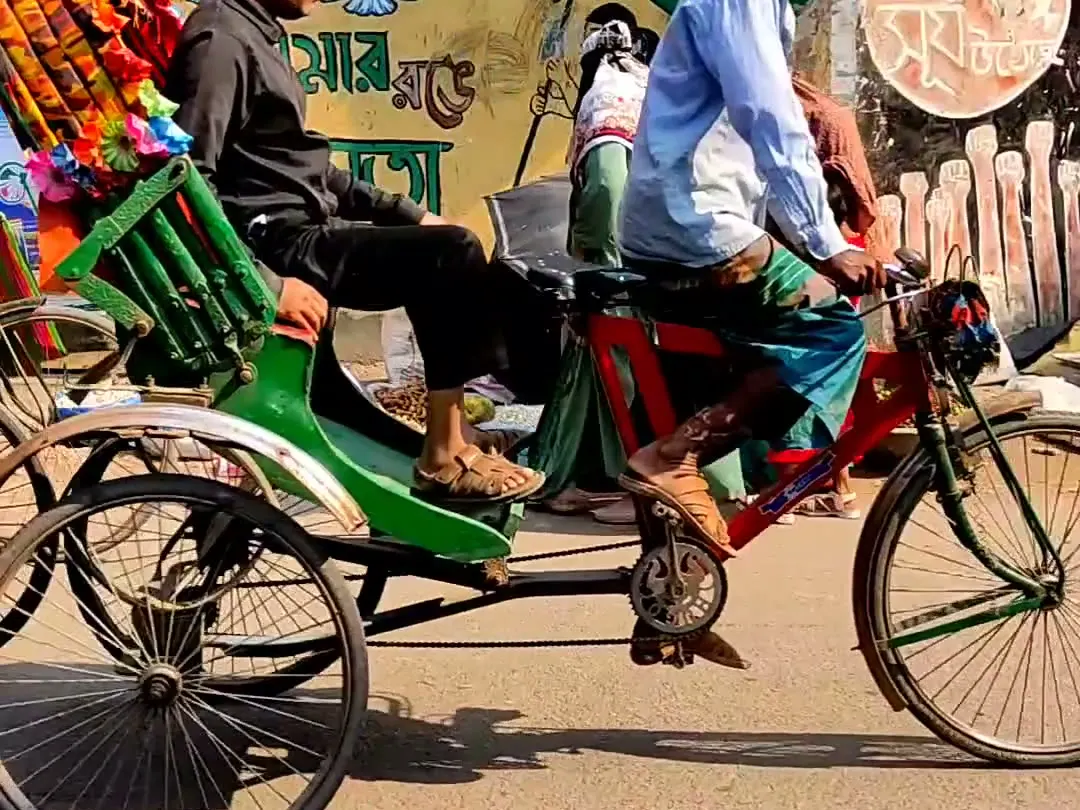
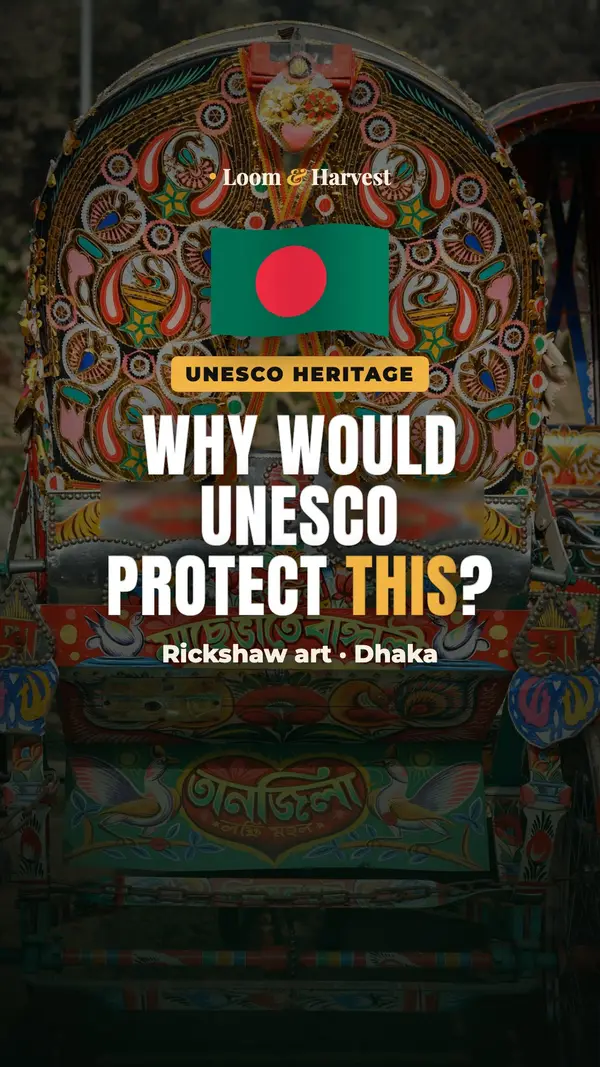
Why would UNESCO protect the back of a Dhaka rickshaw?
Short answer: In December 2023 UNESCO added "Rickshaws and rickshaw painting in Dhaka" to its Representative List of the Intangible Cultural Heritage of Humanity, a list of living skills and traditions rather than places. Almost every part of a Dhaka rickshaw is decorated by hand, and because rickshaws move slowly, UNESCO says the paintings become a "roving exhibition". The listing recognises the craftsmen and painters who keep the skill alive; it is Bangladesh's fifth listed tradition.
Key figures
-
Dec 2023
"Rickshaws and rickshaw painting in Dhaka" inscribed on UNESCO's Representative List at the 18th committee session in Kasane, Botswana
Dec 2023 UNESCO, decision 18.COM 8.B.23
Link to this figure: Dec 2023, "Rickshaws and rickshaw painting in Dhaka" inscribed on UNESCO's Representative List at the 18th committee session in Kasane, Botswana Link copied -
5th
Bangladesh's fifth element on the list; a sixth, Tangail sari weaving, followed in 2025
Nov 2026 UNESCO, Bangladesh elements on the lists
Link to this figure: 5th, Bangladesh's fifth element on the list; a sixth, Tangail sari weaving, followed in 2025 Link copied -
37
Rickshaws in Dhaka in 1941, rising to 181 by 1947
1941–1947 Banglapedia, "Rickshaw"
Link to this figure: 37, Rickshaws in Dhaka in 1941, rising to 181 by 1947 Link copied -
80,000
Licensed rickshaws in Dhaka's two city corporations; analysts estimate 500,000 to 1,000,000 actually run
May 2025 UNB, via Dhaka Tribune
Link to this figure: 80,000, Licensed rickshaws in Dhaka's two city corporations; analysts estimate 500,000 to 1,000,000 actually run Link copied -
15
Rickshaw painters still active, by one veteran painter's own estimate
Jan 2022 The Business Standard
Link to this figure: 15, Rickshaw painters still active, by one veteran painter's own estimate Link copied
The trade-off: The UNESCO listing brings attention and new buyers, but it does not create painters. By one painter's count only about 15 were active in 2022, faster motorised rickshaws leave less room for art, and cheap digital prints now copy the hand-painted look. Some "rickshaw art" products are printed, not painted, so ask which one you are buying.
Still pending
- On 7 October 2026 UNESCO and Windmill Advertising signed an agreement for a project called "Rickshaw Painting: Expanding the Canvas", to train artists and connect them with brands and new markets. As of 22 November 2026 we found no published budget, timeline or list of brands.
Dhaka has so many rickshaws that a 2025 UNB report called it no exaggeration to name it the “City of Rickshaws”. Many of them are covered in hand-made decoration. In 2023, UNESCO added that craft to a list of humanity’s living heritage. This guide explains what the art is, who makes it, and what the listing does and does not mean.
What exactly did UNESCO list?
The entry is called “Rickshaws and rickshaw painting in Dhaka”. It covers two skills: building rickshaws by hand, and painting them. A rickshaw here is a three-wheeled passenger vehicle, in Dhaka usually a cycle rickshaw pedalled by its driver.
The list is the Representative List of the Intangible Cultural Heritage of Humanity. “Intangible” means it records living skills and traditions, not buildings or places. That makes it different from UNESCO’s better-known World Heritage Sites.
The committee decided to inscribe it at its 18th session in Kasane, Botswana. Bangladeshi papers reported the news on 6 December 2023. The Bangla Academy, a national institution, proposed the nomination, and practitioners took part through the Bangladesh Rickshaw Art Society (UNESCO decision).
It is Bangladesh’s fifth listed element, after Baul songs, Jamdani weaving, Mangal Shobhajatra and Shital Pati weaving. Tangail sari weaving followed in 2025.
A listing is not a legal protection order. It recognises the tradition and records the safeguarding steps Bangladesh proposed, such as a dedicated space for the craft and government support for practitioners’ welfare.
What is painted on a Dhaka rickshaw?
According to UNESCO, almost every part is painted: flowers, animals and birds, historical scenes, fables, national heroes, film stars and text. Tassels, plastic flowers and tinsel are added on top.
In a narrow sense, rickshaw art means the backboard, a tin plate at the lower back that hides the chain (Banglapedia). Side panels are painted too. The hood is mostly decorated with appliqué, which means cut-out shapes stitched on, not paint.
Common subjects include rural scenes with cows, huts and palms, mosques, film stars and Borak, the winged horse (Banglapedia). A 2016 Daily Star feature says floral motifs, “especially of the lotus, are a must”. In the 1970s the Liberation War, Bangladesh’s 1971 war of independence, became the main theme (The Business Standard, 2022).
Why does UNESCO call it a “roving exhibition”?
Rickshaws are slow. So the paintings are easy for people on the street to see, and UNESCO says the vehicles become “a roving exhibition”. In other words, a gallery that moves around the city.
That gallery is large. Dhaka’s two city corporations have licensed about 80,000 rickshaws, but analysts estimate 500,000 to 1,000,000 are on the road (UNB, May 2025). A transport expert told UNB that no one knows the true number. Not every rickshaw carries hand-painted art, so the count is not a count of paintings.
Who paints rickshaws, and since when?
Rickshaws are fairly new to Dhaka. The city had only 37 in 1941 and 181 in 1947. Banglapedia says the painting is mainly urban and “perhaps dates back to the 1950’s”. It notes that the style resembles cinema billboards, and that many early painters had painted them.
Painters use ready-made enamel paints in bright primary colours. The style is flat, without shadows, perspective or scale (Banglapedia). An Old Dhaka painter told The Daily Star in 2016 that enamel is chosen for long life, low cost and bright colour.
Skills pass from ustad, or master, to apprentice (Banglapedia). UNESCO adds that painters usually teach their children and close relatives. All rickshaw craftsmen are men, but painters include men and women (UNESCO).
The work takes time. The Daily Star said different parts can take from a few hours to two or three days; The Business Standard said a skilled artist needs a week to decorate a whole rickshaw (2022).
Is hand-painted rickshaw art disappearing?
It is under pressure. In 2022 veteran painter Rafiqul Islam said only 15 rickshaw painters, including him, were still active. That is one painter’s estimate, not a census. The same report says cheap digital prints now copy the look.
In December 2023, AFP reported that faster motorised rickshaws, cars and buses are pushing out pedal rickshaws, and that motorised frames leave less space for art. A 62-year-old painter told AFP fewer young people are learning the trade.
There is new support. On 7 October 2026, UNESCO and Windmill Advertising agreed a project to train artists and connect them with brands and new markets. No budget or timeline had been published as of 22 November 2026.
Where can you find rickshaw art today?
Off the rickshaw, mostly. The Daily Star (2015) found rickshaw designs on furniture, bags, bed linen and clothing at Dhaka shops including Jatra and Aarong. The Business Standard (2022) found them on tea cups, trays, necklaces, jewellery boxes and shoes. Painters also sell panels as art; one has taken commissions from overseas buyers since the 1980s (The Daily Star, 2016).
For another Bangladeshi craft that was nearly lost, read about the Dhaka muslin revival.
Why it matters to buyers today
Rickshaw art is a strong, recognisable Bangladeshi design language, and brands at home already use it on bags, homeware and clothing. But hand painting is slow and the number of painters is small, so a large order is more likely to use printed designs than hand painting. If you want the art on a product, decide whether you need hand-painted pieces or a print, ask who made the artwork, and check samples against the final order. It is the same care you would take to check a “Made in Bangladesh” label. Loom & Harvest does factory checks, sample coordination and inspections for fixed fees; you can send an enquiry.
Common questions
Is Dhaka rickshaw art a UNESCO World Heritage Site?
No. World Heritage Sites are places and buildings. Rickshaw painting is on a different list, the Representative List of the Intangible Cultural Heritage of Humanity, which records living skills and traditions. It was inscribed in December 2023 (UNESCO decision 18.COM 8.B.23).
Does the UNESCO listing protect rickshaws by law?
No. The listing recognises the tradition and records the steps Bangladesh says it will take to safeguard it, such as training and support for practitioners. It does not ban changes to rickshaws or set rules for painters.
Is the hood of a rickshaw painted too?
Mostly not. Banglapedia describes hood decoration as cut-outs appliquéd, or stitched, onto the hood. The painted part is mainly the backboard, a tin plate at the lower back, plus side panels. UNESCO adds tassels, plastic flowers and tinsel.
Can I buy rickshaw art products from Bangladesh?
Yes. Bangladeshi press has reported rickshaw motifs on bags, furniture and clothing (The Daily Star, 2015) and on tea cups, trays, necklaces and jewellery boxes (The Business Standard, 2022). Some are printed copies rather than hand-painted pieces, so ask the seller which you are getting.
Sources
This guide is correct as of . If a figure has changed since, tell us.
- UNESCO, "Rickshaws and rickshaw painting in Dhaka" (element 01589) ich.unesco.org
- UNESCO, decision 18.COM 8.B.23 (December 2023) ich.unesco.org
- UNESCO, Bangladesh: elements on the lists ich.unesco.org Checked 22 November 2026
- Banglapedia, "Rickshaw" (Sirajul Islam; Rickshaw Art section by Niaz Zaman) en.banglapedia.org
- The Daily Star (6 December 2023) thedailystar.net
- The Business Standard (6 December 2023) tbsnews.net
- The Daily Star, "The Common Man's Art" (20 October 2016) thedailystar.net
- The Business Standard, "Rickshaw art seeks refuge on boxes, cups and ornaments" (14 January 2022) tbsnews.net
- The Daily Star, "Canvas of rickshaw art" (30 March 2015) thedailystar.net
- AFP, via Prothom Alo English, "Fading colours" (21 December 2023) en.prothomalo.com
- UNB, via Dhaka Tribune (1 May 2025) dhakatribune.com
- Dhaka Tribune (7 October 2026) dhakatribune.com