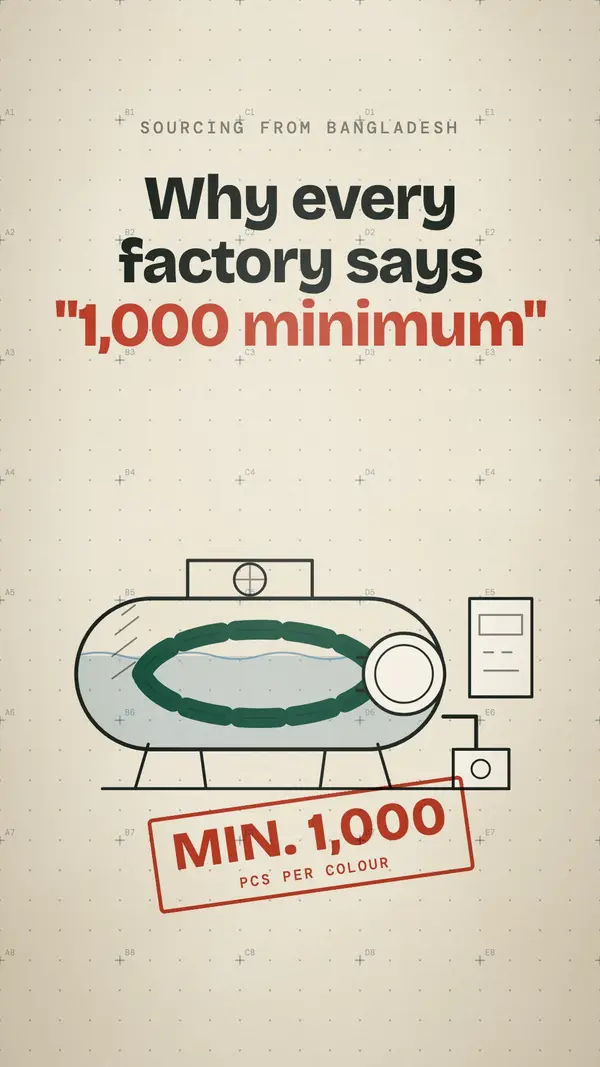
Why Bangladeshi factories say "minimum 1,000 pieces": it's the dye machine
Short answer: Knit fabric is dyed in batches, one colour per batch, and a small bulk batch is about 250 kg of fabric. A basic T-shirt uses about 0.255 kg including cutting waste, so one batch makes roughly 980 shirts, all one colour. That is why the minimum usually counts per colour. You can order fewer, through stock colours, fewer colours, shared dye lots or small-order factories, but each route costs more per piece or limits your choice.
Key figures
-
150–1,500 kg
Bulk dyeing machines at one Gazipur knit dye house (its sample machines: 10–60 kg)
About 2014 Industrial attachment report, Reedisha Knitex (SlideShare)
Link to this figure: 150–1,500 kg, Bulk dyeing machines at one Gazipur knit dye house (its sample machines: 10–60 kg) Link copied -
0.255 kg
Fabric for one basic 180 GSM short-sleeve shirt, including 10% cutting waste (a Bangladeshi costing example)
Undated (about 2016) Md. Khairul Bashar (BUBT), "Garments costing" (SlideShare)
Link to this figure: 0.255 kg, Fabric for one basic 180 GSM short-sleeve shirt, including 10% cutting waste (a Bangladeshi costing example) Link copied -
About 980
T-shirts from one 250 kg dye batch (250 kg ÷ 0.255 kg), all in one colour; our arithmetic
Calculated 22 Nov 2026 Thies via Knitting Industry (250 kg chamber); Bashar costing example
Link to this figure: About 980, T-shirts from one 250 kg dye batch (250 kg ÷ 0.255 kg), all in one colour; our arithmetic Link copied -
500–1,000 kg
Typical knit-fabric minimum per custom colour at the mill (global guide, not Bangladesh-specific)
Aug 2026 FabricBuys
Link to this figure: 500–1,000 kg, Typical knit-fabric minimum per custom colour at the mill (global guide, not Bangladesh-specific) Link copied
The trade-off: Smaller runs are possible, but you pay for them: small dye lots carry surcharges or premiums of about 20–30% in one 2026 guide, a part-full machine uses far more water and salt per kilo, and a reorder dyed in a different lot or machine may not match your first shade. Stock colours and shared lots cut the minimum but limit your colour choice, and small-order factories charge more per piece and often ask for large deposits.
Ask a Bangladeshi knitwear factory for 300 T-shirts in your own colour, and you may hear “minimum 1,000 pieces”. The number is not random. Most of it comes from one machine: the dye machine. This guide shows the arithmetic and five ways a small brand can order fewer, each with its cost.
What does “minimum 1,000 pieces” mean?
The minimum order quantity (MOQ) is the smallest order a factory will accept. Factories often set two layers. One is per style (one design). The other is per colour: each colour of that style must reach its own minimum. For example, one small-batch maker in Narayanganj sets 150 pieces per style, per colourway (page updated 3 November 2026).
Minimums vary widely. In 2019, Bangladeshi exporters’ standard order was at least 5,000 pieces per style, according to Apparel Resources. In 2021, one small-order factory owner claimed that no other Bangladeshi factory could take a start-up’s order of 500 pieces; his own factory started new brands at 50. That is one owner’s view, not a survey.
Why does the dye machine set the number?
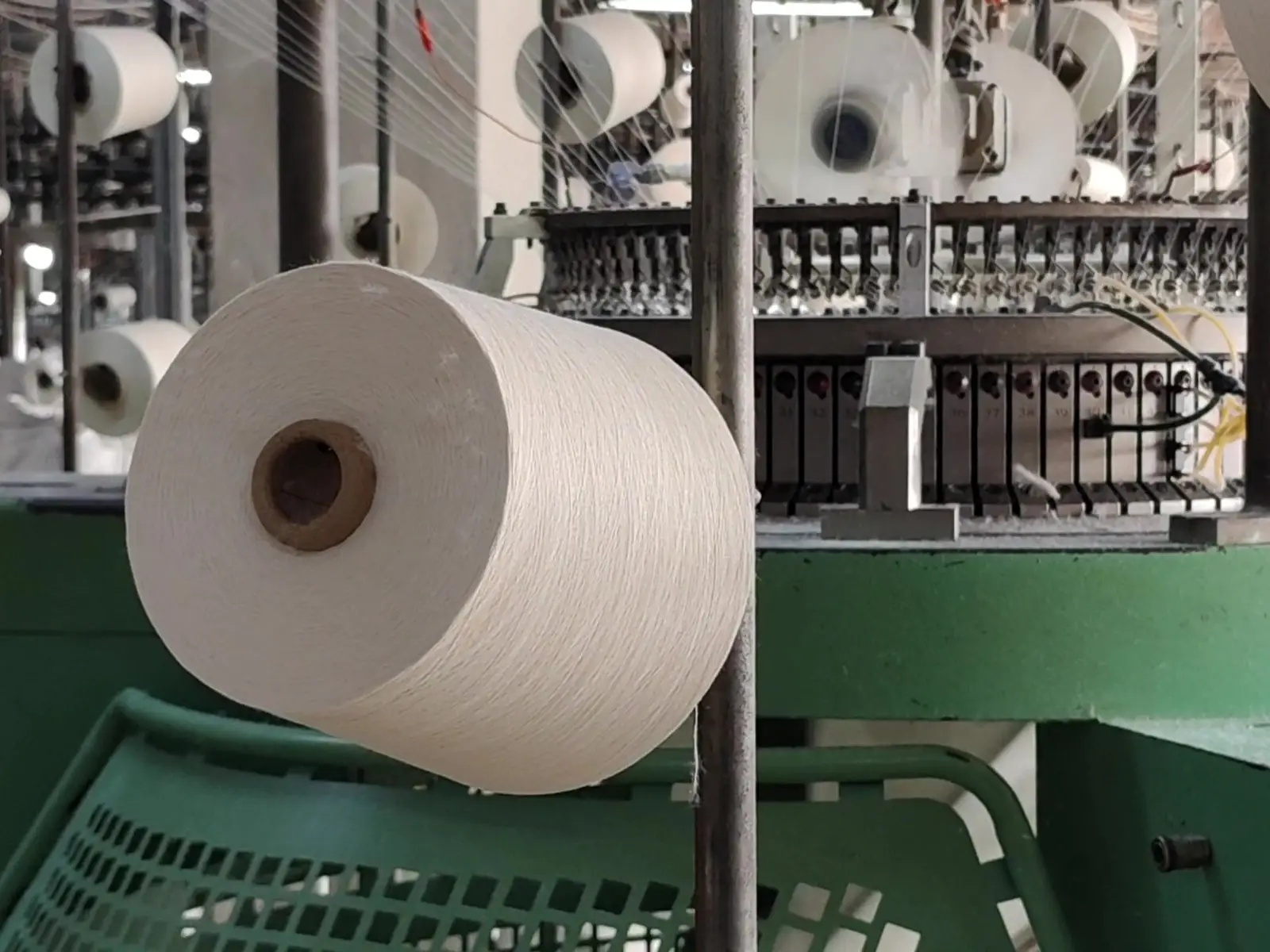
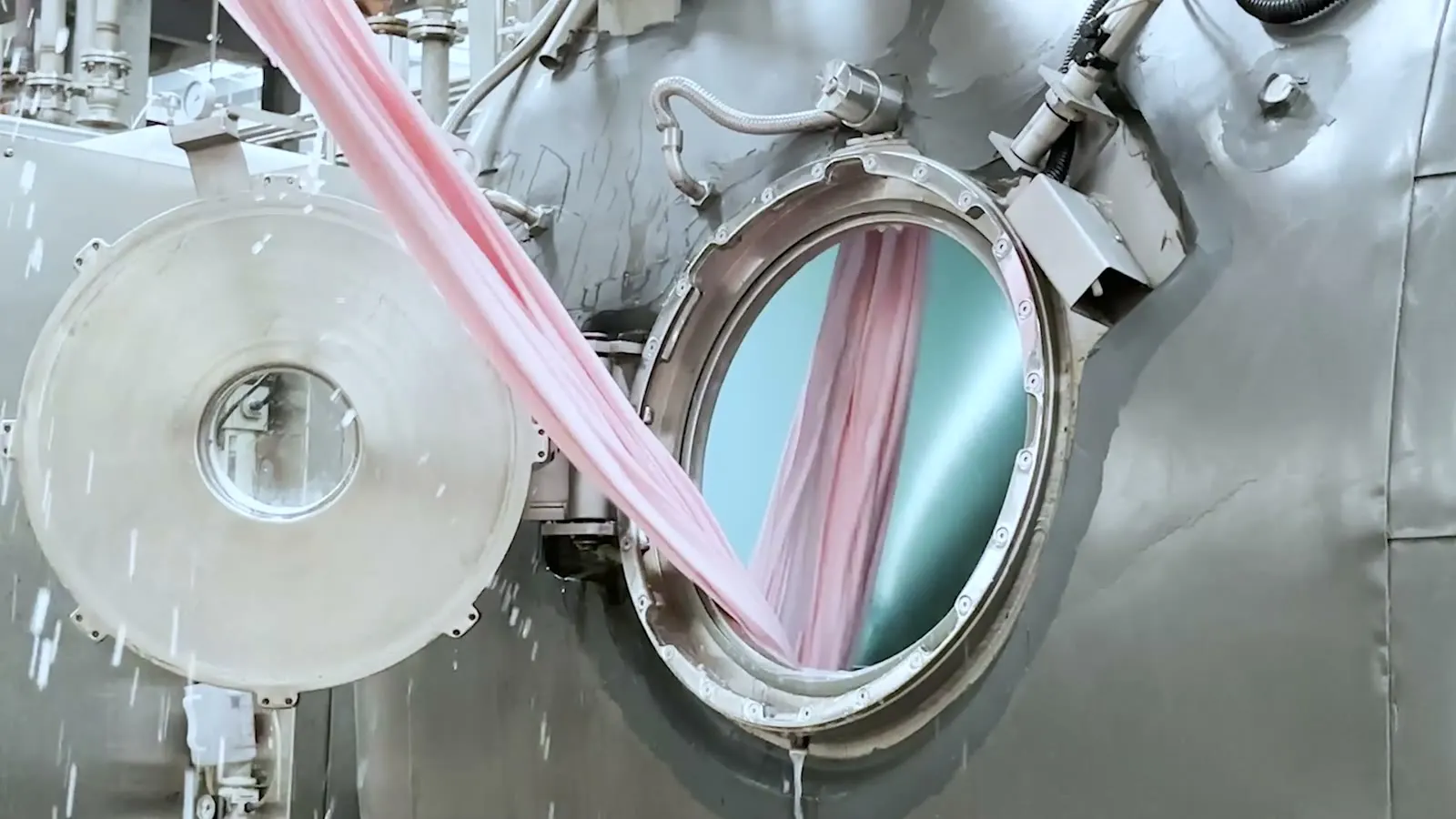
Knit fabric is usually dyed in batches: the whole load in a closed machine comes out one colour. Machines are rated by how many kilograms of fabric they hold.
A training report from about 2014 lists the machines at one Gazipur dye house: sample machines of 10–60 kg and bulk machines of 150–1,500 kg. A second dye house, in Narayanganj, lists bulk machines of 100–1,000 kg, built between 1998 and 2005. Newer machines come in modules: the Thies iMaster H2O has chambers of 100, 200 or 250 kg, up to six per machine (2010). The lists are old, so ask what your dye house runs.
Knit fabric is bought by weight. Its weight per area is its GSM (grams per square metre). The standard method multiplies the pattern area by the GSM, then adds cutting waste. A Bangladeshi costing example works out a basic 180 GSM short-sleeve shirt at 0.232 kg, or 0.255 kg with 10% waste. So:
- 250 kg of fabric ÷ 0.255 kg per shirt ≈ 980 T-shirts, all one colour.
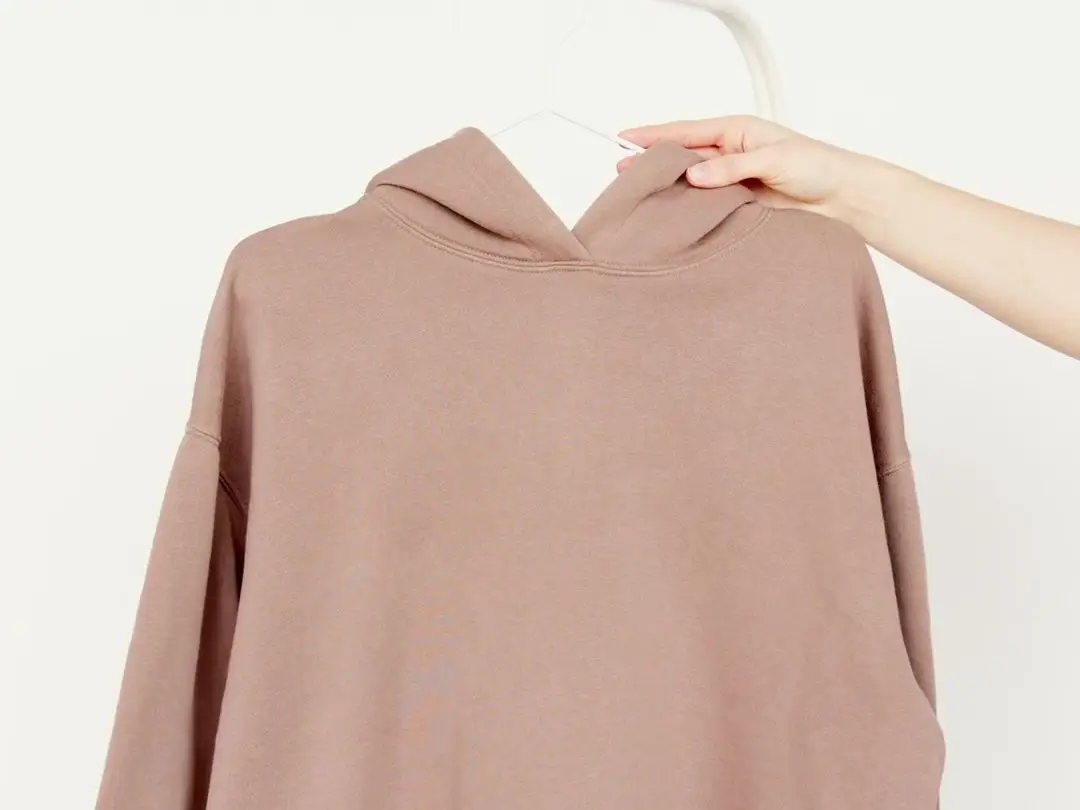
- 250 kg ÷ 0.75 kg per hoodie (one maker’s figure for a 320 GSM fleece hoodie, June 2026) ≈ 330 hoodies.
That is why “about 1,000” is roughly one small bulk batch of T-shirts. Lighter or smaller shirts use less fabric; heavy or oversized ones use more. Some fabric is also lost in dyeing and finishing. We could not find a sourced figure for that loss, so treat 980 as a ceiling.
Why not just run a smaller load?
Factories can, but it costs more per kilo, and the colour is harder to repeat.
Time. A dye cycle takes hours whatever the load. Even a shortened cotton process takes 4–5 hours (2002).
Water and salt. Each machine needs a minimum amount of water to run, and salt is dosed per litre, not per kilo of fabric. The Gazipur report lists a 1,000 kg machine with a minimum of 3,500 litres, a dyeing ratio of 1 kg of fabric to 6 litres, and a medium shade at 40 g of salt per litre. Our arithmetic:
- Full load: 1,000 kg in 6,000 litres × 40 g = 240 kg of salt, or 0.24 kg per kilo of fabric.
- Quarter load: 250 kg still needs 3,500 litres × 40 g = 140 kg of salt, or 0.56 kg per kilo. That is about 2.3 times the salt, water and waste water per kilo.
Colour. A dye supplier’s technical note says changes in lot size or machine type from lot to lot are the most common cause of shade differences (2016). A reorder dyed in a smaller machine may not match your first batch.
The limit: newer machines cope better. Thies says the iMaster suits full and reduced loads, and Fong’s says its small ALLFIT machine (5–120 kg per tube) runs at a liquor ratio almost the same as bulk machines. So the penalty depends on the dye house.
Why is the minimum per colour?
Because each colour is its own batch. The Narayanganj maker says every colour of a tee is its own dye lot and its own cutting lay. Three colours of 300 pieces means three small batches, not one batch of 900.
The per-style minimum comes mostly from the sewing line. After a style change, lines take 4–48 hours to settle (2012). In that article’s example, an 8-hour changeover on a 100-piece lot turns a 1-minute job into 5.8 minutes a piece.
What does the fabric mill add?
Many factories buy fabric from a separate mill with its own minimum. A Laila Group executive in Dhaka told Apparel Resources the MOQ problem arises when fabric quantity and availability do not match (2019). A 2026 global import guide puts custom-colour knit at 500–1,000 kg per colour, 5–12% above stock prices, plus $50–150 per colour for a lab dip (a small dyed swatch you approve before bulk). That guide is not about Bangladesh, so ask your mill.
How can a small brand order fewer?
- Use a stock colour or one already running. The same guide puts stock colours at a minimum of one roll, about 25 kg. Trade-off: you pick from what exists, often black, white, navy or grey, with no exclusive shade.
- Use fewer colours across more styles. A tee, a long-sleeve and a tank in the same fabric and colour can share one dye lot. Laila’s fix was different styles in similar fabric. Trade-off: a smaller colour range, and per-style minimums still apply.
- Share a dye lot. Some factories let brands pool orders that need the same materials and colours (2021). Trade-off: someone must organise it, and everyone waits for the slowest order.
- Pay for a small lot. The import guide quotes 200–300 kg lots in custom shades at a 20–30% premium, and the Narayanganj maker mentions a surcharge for a short dye lot. Garment dyeing, where sewn pieces are dyed afterwards, often runs in smaller lots. Trade-off: some variation piece to piece, some shrinkage and one to two extra weeks (Maker’s Row, July 2026).
- Work with a small-order factory. The 2021 owner ran lines of 4–16 machines, against a typical 40–50. He charged the same for 300 or 500 pieces because buyers pay for the full line, and most paid up to 50% in advance. Trade-off: a higher price per piece, a large deposit, and you must check the factory yourself. See how to verify a factory before you pay a deposit.
Why it matters to buyers today
“Minimum 1,000” is usually arithmetic, not a brush-off. Ask each factory to split its minimum into per style and per colour, in writing, and ask which colours it is already dyeing. Then put the small-run price into your landed cost, the full cost to your warehouse, and plan an inspection that checks bulk against the sample, because a short lot is where shade drift shows. For prices, see our T-shirt FOB guide and 300-hoodie example. Loom & Harvest does factory checks, sample coordination and inspections for fixed fees; you can send an enquiry.
Common questions
Does every factory in Bangladesh want 1,000 pieces?
No. Minimums range widely. Bangladeshi exporters' standard order was at least 5,000 pieces per style in 2019 (Apparel Resources), while one small-batch maker publishes 150 pieces per style per colour (November 2026). About 1,000 per colour is roughly one small bulk dye batch of T-shirts. Ask each factory for its minimum per style and per colour, in writing.
Why are hoodie minimums sometimes lower in pieces?
A hoodie uses about three times the fabric of a basic tee. One maker uses about 0.75 kg of 320 GSM fleece per hoodie (June 2026). So a 250 kg batch makes only about 330 hoodies (250 ÷ 0.75), against about 980 T-shirts.
Can't the factory just use a smaller dye machine?
Often it can. Dye houses keep sample machines of about 10–60 kg. But a small batch takes about as many hours, costs more per kilo, and a reorder dyed in a different lot or machine may not match your first shade. Expect to pay a small-lot surcharge.
Does garment dyeing get around the minimum?
It can lower it. Garment dyeing, where sewn pieces are dyed afterwards, often runs in smaller dye lots than dyed fabric (Maker's Row, July 2026). The trade-offs are some colour variation piece to piece, some shrinkage and one to two extra weeks, and at high volume it can cost more per piece.
Sources
This guide is correct as of . If a figure has changed since, tell us.
- Industrial attachment report, Reedisha Knitex Ltd, Gazipur (SlideShare, about 2014) slideshare.net Dyeing machine list with capacities and minimum liquor; reactive dyeing liquor ratio; salt and soda per litre
- Lawyers & Jurists, Fariha Knit Tex attachment report (undated; machines built 1998–2005) lawyersnjurists.com Second Bangladesh dye-house machine list, 100–1,000 kg bulk
- Knitting Industry, Thies iMaster H2O (29 July 2010) knittingindustry.com 100, 200 or 250 kg chambers, up to six; suitable for full and reduced loads
- Fong's, ALLFIT machine page (undated) fongs.eu 5–120 kg per tube; liquor ratio almost the same as bulk machines; small lots for sample approval
- Md. Khairul Bashar (BUBT), "Garments costing" (SlideShare, undated) slideshare.net 180 GSM shirt: 0.232 kg, 0.255 kg with 10% wastage
- Online Clothing Study, "How to calculate fabric consumption of a garment?" (19 March 2011) onlineclothingstudy.com Standard knit consumption formula; fabric losses added separately
- TAT Clothing Co, hoodie costing (24 June 2026, updated 21 November 2026) tatclothingco.com About 750 g of 320 GSM fleece per hoodie
- Shang and Chong, AATCC Review 2(4) (2002) research.polyu.edu.hk A shortened cotton bleach-and-dye process still takes 4–5 hours
- First Source Worldwide, "How to reduce variables in fiber reactive dyeing" (31 May 2016) fsw.cc Lot size and machine type are the most common causes of shade variation between lots
- Collective Studio Ltd, T-shirt manufacturing page (updated 3 November 2026) collectivestudioltd.com A maker's own terms: 150 per style per colourway; each colour its own dye lot; short-dye-lot surcharge; price steps at about 1,000 per colour
- Apparel Resources, MOQ issues when sourcing from Bangladesh (29 March 2019) apparelresources.com 5,000 pieces per style standard; Laila Group on fabric quantity; solve MOQ at the mill
- Apparel Resources, style changeover time (1 May 2012) apparelresources.com Lines take 4–48 hours to stabilise; 8-hour changeover example
- The Business Standard, "A unique RMG factory: When small is beautiful" (3 October 2021) tbsnews.net One small-order factory owner's claims; his lines and pricing
- FabricBuys, "Knit fabric MOQ and pricing" (5 August 2026) fabricbuys.com Stock and custom-colour minimums, small-lot premium, lab dip cost; global, not Bangladesh-specific
- Glossy, factories raising minimums (4 June 2021) glossy.co Pooling orders that share materials and colours
- Maker's Row, "What is garment dyeing?" (9 July 2026) makersrow.com Smaller dye lots; variation, shrinkage, one to two extra weeks