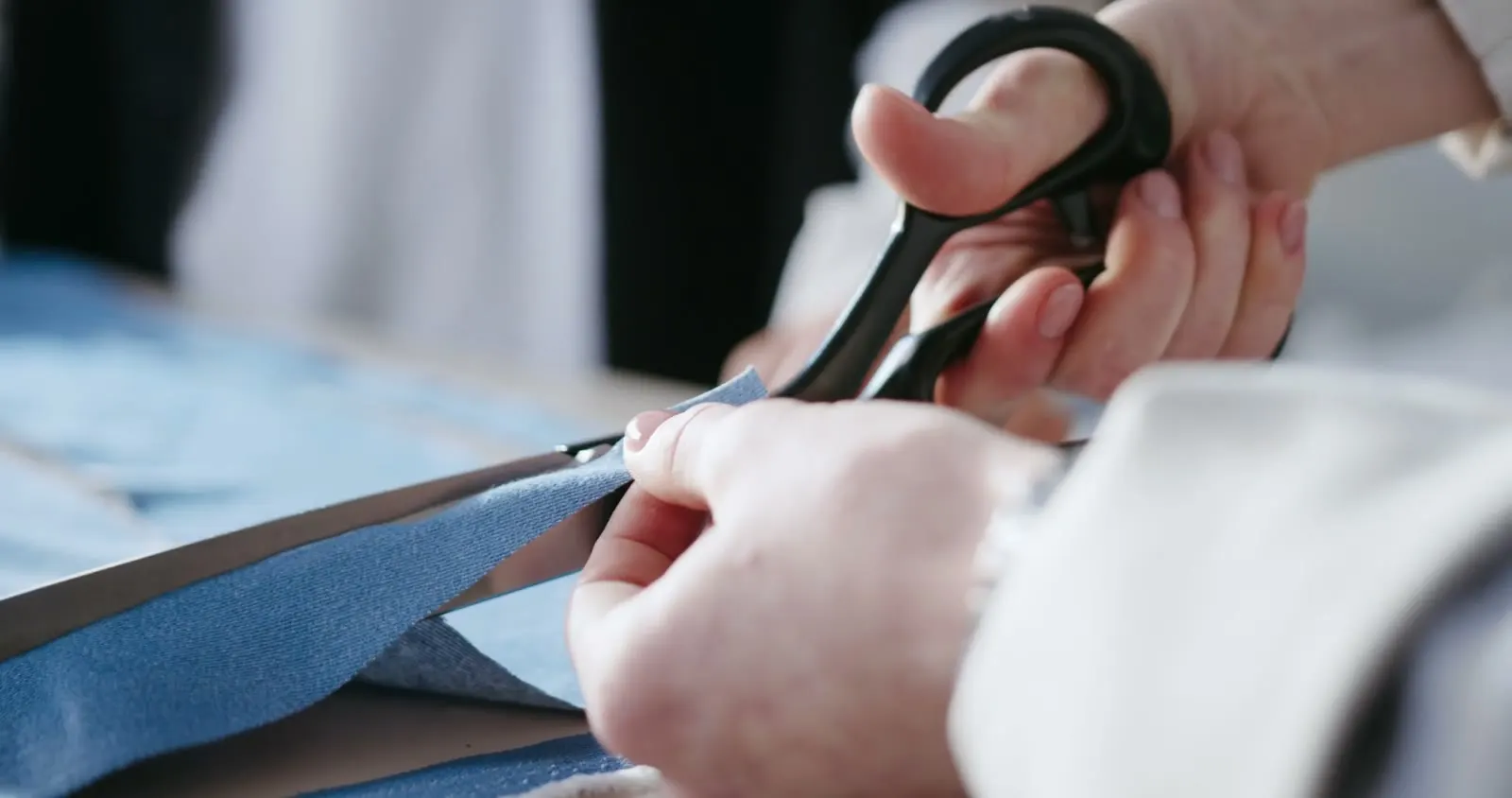
Bangladesh jeans: No. 1 in the US and EU, and about $8 a pair at the border
Short answer: In 2025 Bangladesh was the biggest supplier of denim clothing to both the US (about 26% of imports by value, $955.7 million) and the EU (about 30%, $1.64 billion), together about $2.6 billion, up roughly 25% in a year. From January to September 2026, the average pair of jeans it sent to the EU was declared at €6.90, about $8, at the border, shipping included. That is an average across all kinds of jeans, not a factory quote and not what your $50 pair cost to make. Duty is zero into the UK and EU with proof of origin, but about 26.6% into the US.
Key figures
-
$2.6 billion
Bangladesh's denim exports to the US and EU together in 2025, up about 25% on $2.07 billion in 2024
2025 (published 19 Apr 2026) Prothom Alo, citing OTEXA and Eurostat
Link to this figure: $2.6 billion, Bangladesh's denim exports to the US and EU together in 2025, up about 25% on $2.07 billion in 2024 Link copied -
€6.90 (about $8)
Average value of a pair of jeans from Bangladesh at the EU border, shipping included, before duty and VAT
Jan–Sep 2026 Eurostat Comext (DS-045409); ECB exchange rates
Link to this figure: €6.90 (about $8), Average value of a pair of jeans from Bangladesh at the EU border, shipping included, before duty and VAT Link copied -
26.6%
US duty on cotton denim jeans from Bangladesh (16.6% normal duty plus 10% Section 301)
Since 24 Jul 2026 US International Trade Commission (HTS)
Link to this figure: 26.6%, US duty on cotton denim jeans from Bangladesh (16.6% normal duty plus 10% Section 301) Link copied
The trade-off: The $8 is an average border value across every kind of jeans, including budget and children's pairs, not a factory quote for your style, and it has been falling. About 30% of the denim fabric Bangladesh uses is imported, which adds time and cost, and gas shortages hold many mills at 60–70% capacity. US buyers pay about 26.6% duty, and zero UK and EU duty needs proof of origin and is confirmed in the EU only to at least the end of 2029.
Still pending
- Eurostat had not published October 2026 data when we checked on 22 November 2026. Eurostat also revises past months: its 13 November update moved the January–August 2026 average from €6.83 to €6.86 a pair.
- A US zero-duty quota for Bangladeshi clothing made with US cotton had not been set up as of 25 September 2026, and a second US Section 301 investigation that includes Bangladesh (on excess capacity) was still open with no action.
- The US figures for 2025 come from OTEXA, the US textile office, as reported by The Daily Star and Prothom Alo. We could not open the OTEXA database directly. There is no published 2026 US ranking yet.
Check the label inside your jeans. There is a good chance it says “Made in Bangladesh”. In 2025 Bangladesh sold more denim clothing to both the US and the EU than any other country. This guide covers how big that trade is, what the average pair is worth when it reaches Europe, and what it means if you want to make jeans there. All dollar figures are US dollars.
Who supplies the most jeans to the US and EU?
Bangladesh does, in both markets. In 2025 the US bought $955.7 million of denim clothing from Bangladesh, a 25.97% share, according to The Daily Star (14 March 2026), citing OTEXA, the US government’s textile office. That is about 26% of $3.68 billion of US denim imports (Prothom Alo, April 2026).
The EU bought $1.64 billion, a 29.88% share. We re-ran the Eurostat figures for 2025 for cotton denim trousers and got the same share: 29.88% of the value of jeans the EU imports from outside the EU. By number of pairs the share is higher, at 41%, or about 210 million pairs.
Two limits. The EU figure covers imports from outside the EU only, not jeans made inside it. And no 2026 US ranking has been published yet, so “No. 1 in the US” is a 2025 fact.
How big is the trade, and how fast is it growing?
Together the two markets bought about $2.6 billion of Bangladeshi denim in 2025, up from $2.07 billion in 2024, a rise of about 25%. US sales grew 34% and EU sales 21%.
Behind this sits a fabric industry that grew fast. Bangladesh had about 12 denim fabric mills a decade ago and nearly 50 today (March 2026). The same report lists the limits: local mills meet only about 70% of the fabric demand, the rest comes from India, China and Pakistan, and gas shortages keep many mills at 60–70% of capacity.
What is a pair of jeans worth at the border?
Eurostat records both the value and the number of pairs the EU imports. Divide one by the other and you get the unit import price: the average value of one pair as declared to customs.
From January to September 2026, the average pair from Bangladesh was worth €6.90 at the EU border. At the ECB’s average rate for those months, about $1.16 per euro, that is about $8. The same data gives about €8.60 (about $10) for a pair from China and about €16.83 (about $20) from Turkey.
What the $8 is, and is not:
- It is a CIF value: the factory price plus freight and insurance to the EU border. It comes before duty and VAT.
- It is an average across all jeans: men’s, women’s and children’s, basic and better.
- It is not a factory quote, and it is not what your $50 pair cost to make. We have not verified a public factory price for jeans, so we do not quote one.
The average has been falling while volume grows. It was €7.21 a pair in 2024 and €6.93 in 2025. This is the same method as our $2 T-shirt guide. Our Short What a $50 pair of jeans is really worth (28 October 2026) used January–August data, then €6.83 a pair; Eurostat has since revised that period to €6.86.
Where does the rest of a $50 price go?
If a pair sells for $50 in a UK shop, about $8 was its average value at the border. Here is where much of the rest goes:
- VAT. UK VAT is 20%, added on top of the price. So VAT is one-sixth of the shelf price: about $8.33 of $50. Children’s clothes are zero-rated.
- Duty. Zero into the UK and EU for Bangladeshi jeans with proof of origin (see below). Into the US, about 26.6% of the declared value.
- The brand and the shop. Warehousing, rent, staff, marketing, markdowns on stock that does not sell, and then profit.
We do not split that last line into amounts, because we have no source for it. The other $42 or so is not all profit.
How are jeans made in Bangladesh?
The video shows real photos taken in Bangladeshi denim factories by Fahad Faisal (2013–2014, CC BY-SA 4.0). Fabric is cut on a computer-programmed cutting machine. The pieces are stitched, then washed. The video also shows them being sanded by hand and sprayed, then cured in large ovens. Finally they are checked and tagged for shipping.
Washing gives jeans much of their look. The president of BGMEA, Bangladesh’s garment exporters’ association, says washing needs high gas pressure, which links finishing directly to the gas shortages above.
What does this mean for a brand ordering denim?
Duty depends on where you sell. Men’s denim trousers pay a normal 12% in the UK and 12% in the EU, but 0% from Bangladesh with proof of origin. The UN has delayed Bangladesh’s graduation from least-developed-country status to 24 November 2029, and the EU keeps duty-free access to at least the end of 2029. The US charges 16.6% on men’s and 16.6% on women’s cotton jeans, plus 10% under Section 301 since 24 July 2026: about $2.66 on every $10 of declared value. Our duty guide has the details by market.
Minimums depend on the fabric. The minimum order quantity (MOQ) is the smallest order a factory accepts. We found no independent published MOQ for jeans. Bangladeshi exporters say the MOQ problem sits with the fabric mill (2019). With about 30% of fabric imported, choosing an imported denim can also add time and cost. Ask each factory for its minimum per style and per fabric, in writing.
Work out your own landed cost. The landed cost is the full cost of getting goods to your warehouse: factory price, freight, duty and fees. Use our landed-cost estimator, or see the 300-hoodie worked example.
Why it matters to buyers today
Bangladesh is the leading jeans supplier to the US and EU, and the average pair crosses the EU border at about $8. Your price will depend on fabric, wash, quantity and the factory, so treat $8 as an average, not a target. The volume is real, but so are the limits: imported fabric, gas shortages, falling unit prices and US duty. For the wider picture, see why so much clothing is made in Bangladesh. Loom & Harvest does factory checks, sample coordination and inspections for fixed fees; you can send an enquiry.
Common questions
Does a pair of jeans from Bangladesh cost $8 to make?
No. About $8 (€6.90) is the average value of a pair declared at the EU border from January to September 2026, with freight and insurance included and before duty and VAT (Eurostat). It averages every kind of jeans, including budget and children's pairs. It is not a factory quote, and we have not verified a public factory price.
Is Bangladesh the biggest jeans supplier to the US and Europe?
Yes, in 2025. It had about 26% of US denim clothing imports by value (OTEXA, via The Daily Star, March 2026) and 29.9% of the EU's imports of denim trousers from outside the EU (Eurostat). By number of pairs, its EU share is higher: 41% in 2025.
What duty do I pay on jeans from Bangladesh?
Zero into the UK and the EU with proof of Bangladeshi origin, against a normal rate of 12% (UK Trade Tariff, checked 22 November 2026). Into the US, about 26.6%: 16.6% normal duty plus 10% under Section 301 since 24 July 2026 (USITC).
Can a small brand order jeans from Bangladesh?
Sometimes, but minimums vary by factory, and we found no independent published figure for jeans. The fabric often decides it: exporters say order minimums depend on the fabric mill (Apparel Resources, 2019), and about 30% of denim fabric is imported (The Daily Star, 2026). Ask each factory for its minimum per style and per fabric in writing.
Sources
This guide is correct as of . If a figure has changed since, tell us.
- The Daily Star, "The rise of a denim empire" (14 March 2026) thedailystar.net US and EU values, shares and growth for 2025, citing OTEXA and Eurostat; mills, gas and imported fabric
- Prothom Alo (19 April 2026) en.prothomalo.com US and EU combined total, 2024 comparison, total US denim imports
- Eurostat Comext DS-045409, EU imports, January–September 2026 (updated 13 November 2026) ec.europa.eu Cotton denim trousers, CN 6203 42 31 and 6204 62 31, imports from outside the EU; value and number of pairs
- Eurostat Comext DS-045409, EU imports, 2025 ec.europa.eu
- Eurostat Comext DS-045409, EU imports, 2024 ec.europa.eu
- European Central Bank (euro reference rates, US dollar) ecb.europa.eu Average of monthly rates, January–September 2026: about $1.16 per euro
- US International Trade Commission, HTS 6203.42 (men's cotton trousers, including blue denim) hts.usitc.gov
- US International Trade Commission, HTS 6204.62 (women's cotton trousers, including blue denim) hts.usitc.gov
- US International Trade Commission, HTS 9903.05.26 (Section 301, Bangladesh) hts.usitc.gov
- US Federal Register 2026-15181 (Section 301 actions) federalregister.gov
- AirliftUSA (Bangladesh tariff tracker, updated 25 September 2026) airliftusa.com
- UK Trade Tariff (men's denim trousers, 6203 42 31) trade-tariff.service.gov.uk
- UK Trade Tariff, Northern Ireland (EU rates, 6203 42 31) trade-tariff.service.gov.uk
- European Commission (EU GSP scheme from 2027) trade.ec.europa.eu
- The Business Standard (LDC graduation delayed to 2029) tbsnews.net
- GOV.UK (VAT rates) gov.uk
- Apparel Resources (MOQ and fabric supply, 2019) apparelresources.com
- Wikimedia Commons, Fahad Faisal (denim factory photos, Bangladesh) commons.wikimedia.org Also Denim fabric Cutting Machine.jpg and Denim Jeans Curing Side.jpg; CC BY-SA 4.0