Banana fibre, automatic sewing, jeans passports: Dhaka's textile expo 2026
Short answer: At the Textile Innovation Expo 2026 in Dhaka (12–14 November) we filmed banana and pineapple fibre samples, a machine stitching a denim patch by itself, and a talk on the EU's planned digital product passport for clothes. Together they show an industry trying to move from cheap volume to higher-value, traceable clothing. Most of it is early: the fibres are samples, the machines are exhibitors' demonstrations, and the EU's textile rules are only planned for adoption in late 2027.
Key figures
-
~50 + ~200
Factories and technology providers the organisers expected at the expo, before it opened
13 Oct 2026 The Business Standard (organisers' briefing)
Link to this figure: ~50 + ~200, Factories and technology providers the organisers expected at the expo, before it opened Link copied -
Q4 2027
Planned adoption of the EU's ecodesign rules for textiles, which will include the digital product passport (indicative)
Nov 2026 European Commission
Link to this figure: Q4 2027, Planned adoption of the EU's ecodesign rules for textiles, which will include the digital product passport (indicative) Link copied -
18 months
Minimum time between an ecodesign rule entering into force and applying, except in justified cases (ESPR Article 4(4))
Jun 2024 Regulation (EU) 2024/1781, EUR-Lex
Link to this figure: 18 months, Minimum time between an ecodesign rule entering into force and applying, except in justified cases (ESPR Article 4(4)) Link copied
The trade-off: Most of what the expo showed is early. Banana fibre is a small trade that has struggled to find buyers, the machines were exhibitors' demonstrations with no independent productivity data, automation has been linked to fewer jobs for women, and the EU passport rules for clothes are not yet law. For a small brand, traceability will mean more paperwork, and possibly higher costs, before it brings any benefit.
Still pending
- EU digital product passport for textiles: the European Commission plans to adopt the textiles delegated act in Q4 2027 and calls this timeline indicative (page read 22 November 2026). No application date has been set. Under the ESPR it cannot apply earlier than 18 months after the act enters into force, except in justified cases.
- Final visitor and exhibitor numbers had not been published by the organisers as of 22 November 2026. The expo figures in this guide are the organisers' pre-event expectations.
Many buyers still think Bangladesh makes only cheap T-shirts. On 13 November 2026, day two of the show, we filmed the Textile Innovation Expo 2026 in Dhaka to see what else the industry wants to show. A wall in the FPG buyers’ lounge put the mood in one line: “Bangladesh is not just cheap, it’s also an innovation driven textile & apparel industry.”
Here is what we saw, and what it means for buyers.
What the expo is
The expo ran from 12 to 14 November 2026 at the International Convention City Bashundhara (ICCB) in Dhaka (The Business Standard, 13 October 2026). According to its official website, it was organised by the Textile Innovation Exchange and co-organised by the Textile Innovation Centre. Textile Innovation Hub was the implementation partner, ITET (the Institution of Textile Engineers and Technologists) the collaboration partner, and two trade bodies, BKMEA (knitwear makers) and BGBA (buying houses), were association partners.
Before it opened, the organisers expected about 50 factories and 200 technology and solution providers, in four zones: dyeing and printing, textile materials, garment automation, and green technology (13 October 2026). They said the industry must move beyond cheap labour and mass production. They pointed to Eurostat data showing that the average price per kilo of Bangladeshi clothing in the EU fell in early 2026, while Vietnam’s rose.
The limit: the organisers had not published final visitor and exhibitor numbers when we checked on 22 November 2026.
New fibres: banana, pineapple and cottonized jute
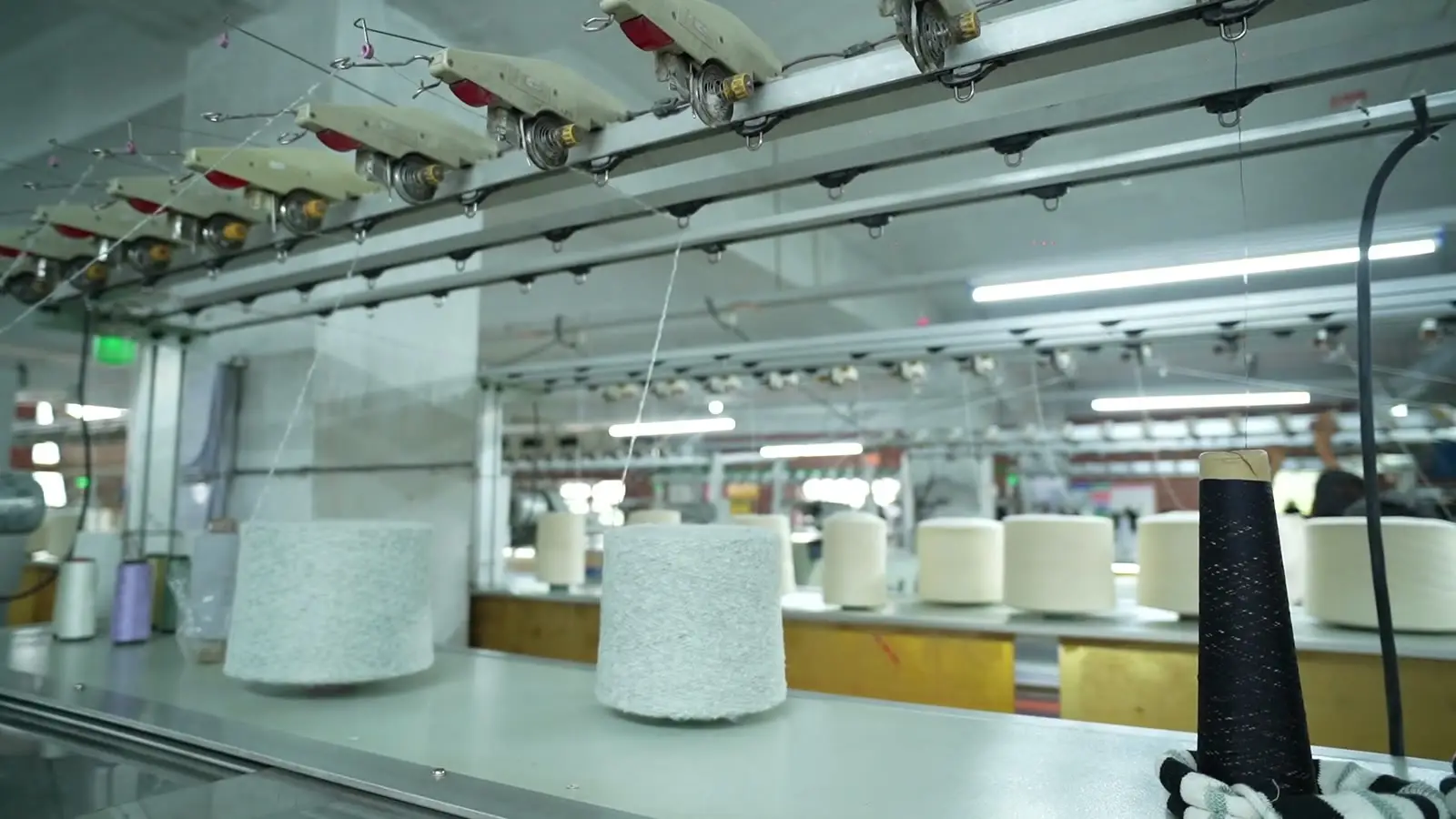
At Salma Group’s JUTCO Fibre stand we saw boxes of raw and bleached banana fibre, cottonized pineapple fibre, jute, hemp and linen. “Cottonized” means processed so the fibre can run on the same spinning machines as cotton. The company describes JUTCO as a cottonized fibre modified from jute, aimed at a linen-like feel (Textile Today interview, 30 October 2024).
Why banana? A banana plant fruits once. Then the stem is cut down or left to rot, and a plantation leaves about two tonnes of debris for every tonne of fruit (The Business Standard, 26 July 2023). Jute is an old strength: India and Bangladesh grew more than 95% of the world’s jute and kenaf in 2017/18 (FAO, 2019).
The limits: the blended yarns on the stand were cotton, jute and Tencel. We saw no banana yarn. Banana fibre is not new in Bangladesh, and small makers in Sirajganj and Jashore said early orders dried up and foreign buyers did not follow through (2023). Salma Group itself named strength, stretch and an itching effect in early blends as problems to solve (2024).
Automation: a machine that stitches denim by itself
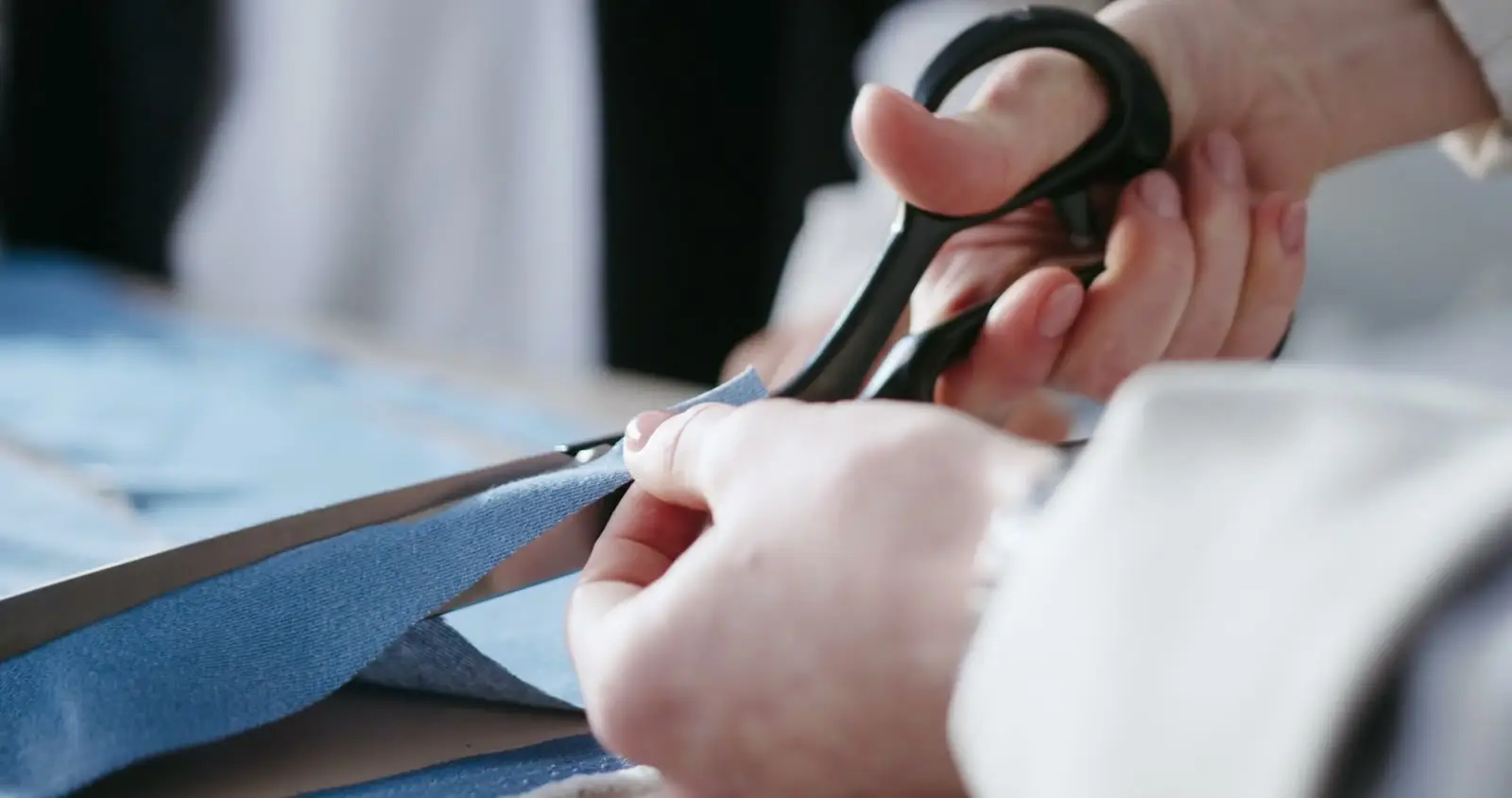
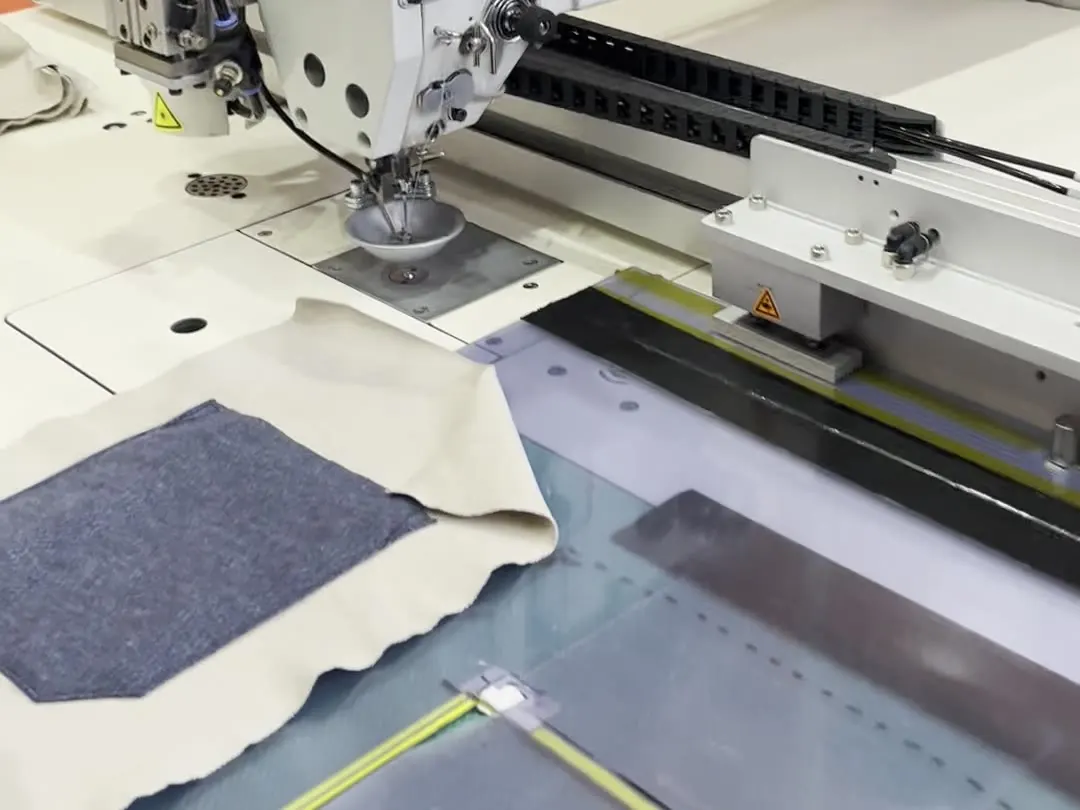
We filmed an automatic pattern sewer. The worker lays a denim patch in a plastic template. The machine follows a programmed path and stitches the whole shape. Makers of these machines, such as JUKI, say template sewing gives consistent quality and lets a novice operator do skilled work (catalogue, January 2026). That is a maker’s claim, and the machine we filmed was a different brand.
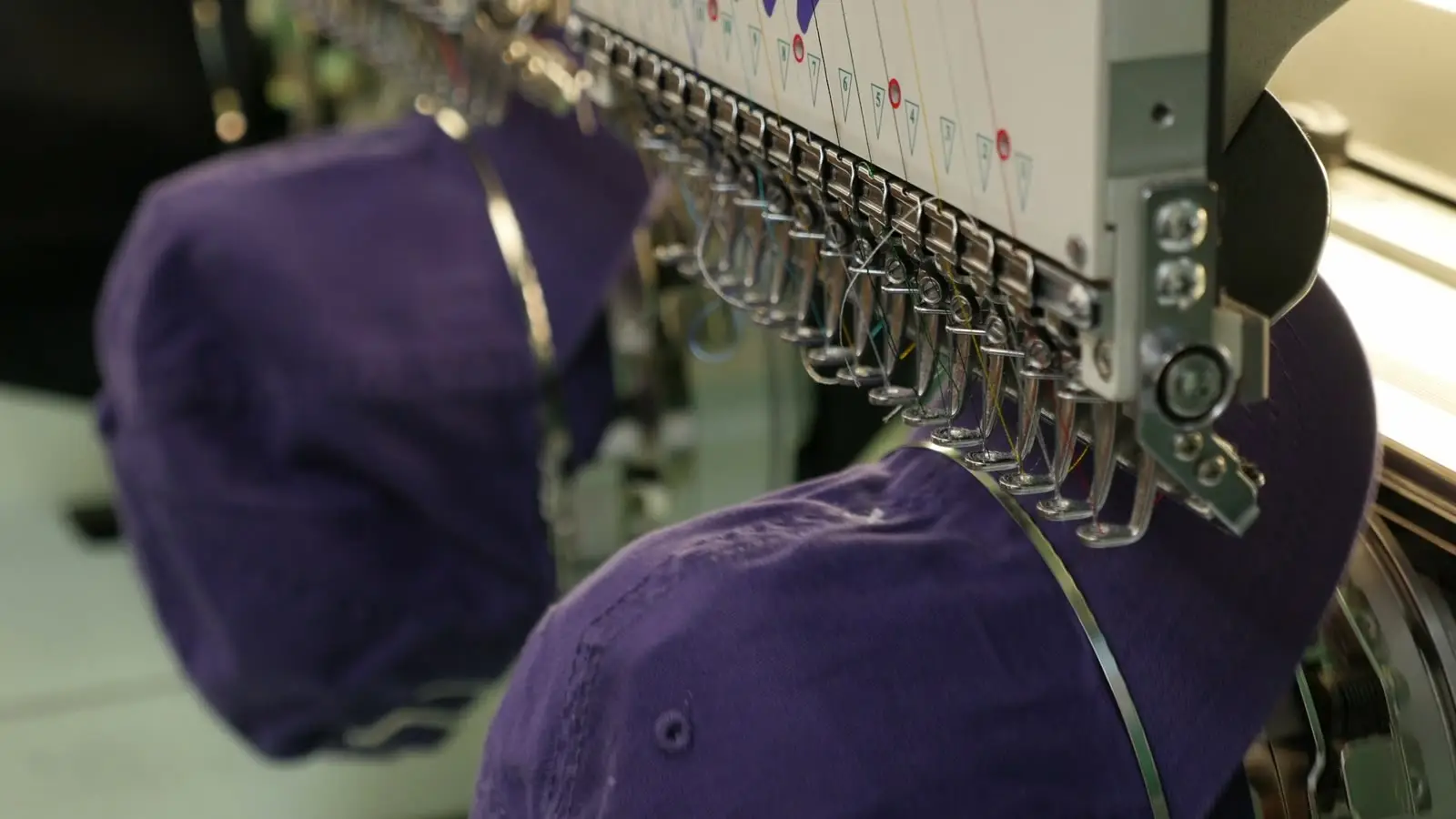
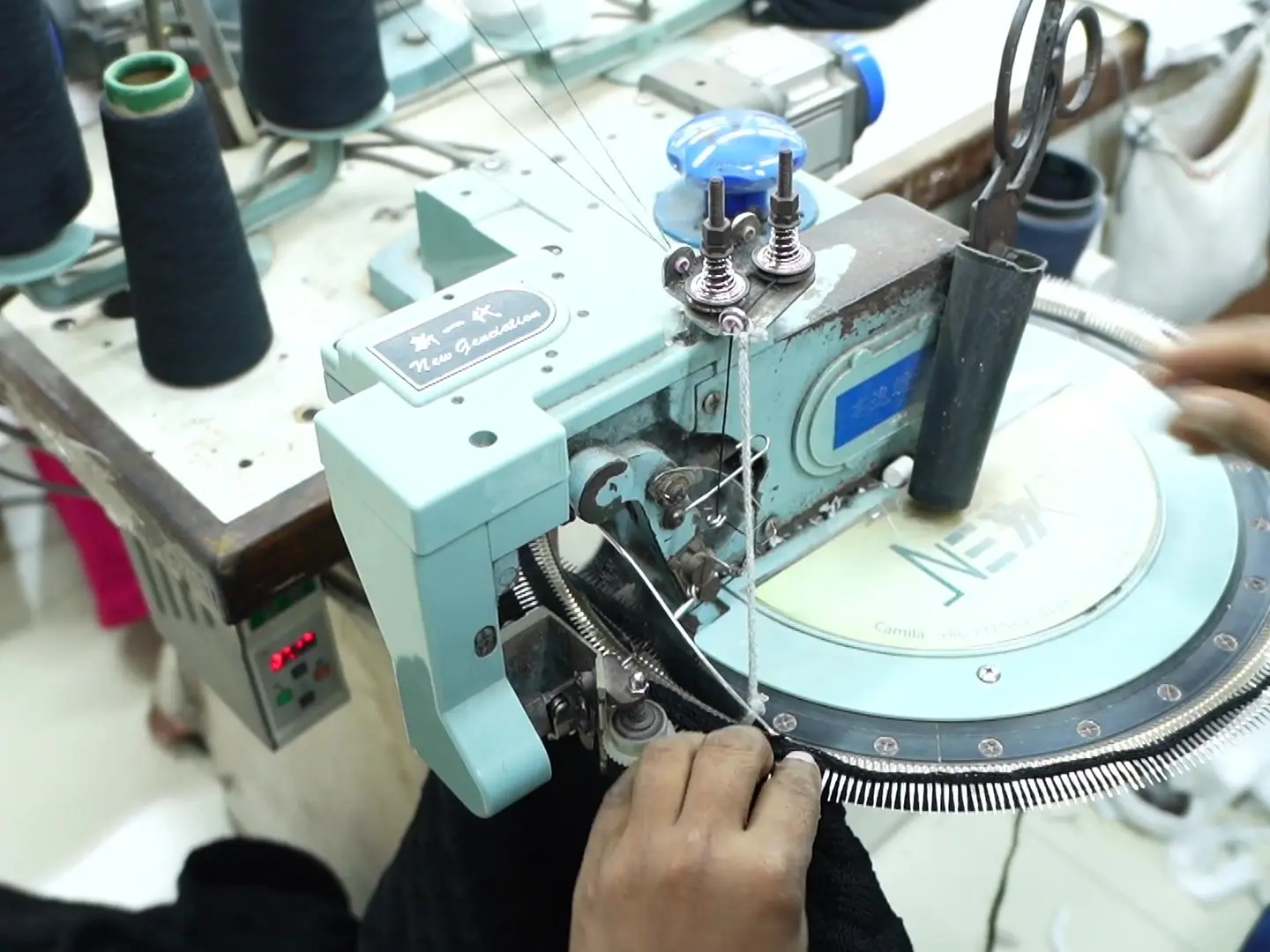
Elsewhere at the expo we saw a Shima Seiki knitting machine marked WHOLEGARMENT. Shima Seiki says these machines knit garments in three dimensions without seams. We did not see a finished sweater come off it.
Why does Bangladesh want this? It was the world’s second-largest clothing exporter in 2025, after China, with $38.82 billion (WTO data, July 2026). But Vietnam was close behind at $37.51 billion and grew 10.53%, while Bangladesh grew 0.89%. The industry’s answer is more valuable clothes, not just more of them, as in our jeans guide.
The limits: these were exhibitors’ demonstrations, with no independent productivity figures. A 2018 study by the Centre for Policy Dialogue linked it to a fall in women’s share of garment jobs, from 64% in 2015 to 60.8% in 2016 (The Daily Star, 3 March 2018).
The Digital Product Passport: proving where your jeans came from
A digital product passport (DPP) is a digital record of a product, reached through a data carrier on it, such as a QR code. It comes from the EU’s Ecodesign for Sustainable Products Regulation (ESPR), Regulation (EU) 2024/1781, in force since July 2024. In April 2025 the Commission named textiles, with a focus on apparel, as a priority. It plans to adopt the textile rules in Q4 2027, a timeline it calls indicative.
The Commission says a clothing passport may include product details, fibre composition, repair and care information, reuse and recycling information, origin information, and who the companies in the chain are. The exact fields are not yet defined.
At the expo, a session on 13 November asked on screen: “Can you prove where your jeans came from?” One slide showed a sample passport for jeans: organic cotton, recycled polyester, even a recycled zip. It was the speaker’s example, not an EU template.
What will it ask of factories and brands? In law, the manufacturer (often the brand) and the importer must each make sure a passport is available (ESPR, Articles 27 and 29). But the data starts in Bangladesh: fibre, yarn, fabric mill, factory. That matters because the EU took 49.25% of Bangladesh’s clothing exports in FY2025-26, worth $19.06 billion. BGMEA, the garment exporters’ association, signed a passport pilot agreement with the Dutch platform AWARE on 10 May 2026. No factories or results have been named.
The limits: this is not law for clothes yet. The ESPR says a rule cannot apply earlier than 18 months after it enters into force, except in justified cases (Article 4(4)). By our arithmetic, that means 2029 at the earliest. One ESPR rule already applies: since 19 July 2026, large companies may not destroy unsold clothes and shoes in the EU (European Commission, 9 February 2026).
What it means for sourcing
- Start keeping records now. For each order, keep the fibre content, yarn and fabric suppliers, certificates and the factory’s address. A passport will need this later.
- Treat new fibres as development work. Ask for test reports, a sample and the minimum order quantity (MOQ, the smallest order a factory accepts) in writing.
- Automation does not replace checks. Approve a sample and inspect the bulk, as our sample-versus-bulk guide explains.
- Ask who you are talking to. Most exhibitors were expected to be technology and solution providers, not factories. Our five checks before a deposit show how to tell a factory from a trader.
Watch the series
- Bangladesh only makes cheap T-shirts? 5 things we saw at the expo
- Your next T-shirt could start as a banana plant
- This machine stitches denim by itself
- Can you prove where your jeans came from?
Why it matters to buyers today
The expo showed where Bangladesh’s clothing industry wants to go: new fibres, more automation and proof of origin. Most of it is not ready at scale, and the EU passport rules are years away. But a supplier who can already show where its fibre and fabric come from will be easier to work with when they arrive. Bangladesh makes far more than T-shirts, as our guide to its other exports shows. Loom & Harvest does factory checks, sample coordination and inspections for fixed fees; you can send an enquiry.
Common questions
What was the Textile Innovation Expo 2026?
A three-day trade show for new fibres, machines, chemistry and green technology in Bangladesh's textile and clothing industry. It ran from 12 to 14 November 2026 at the International Convention City Bashundhara (ICCB) in Dhaka, organised by the Textile Innovation Exchange (The Business Standard, 13 October 2026). The organisers' website lists the next edition for 9–11 December 2027.
Can I order banana-fibre T-shirts from Bangladesh?
Not as a normal product today. At the expo we saw banana fibre as samples, and the blended yarns on show were cotton, jute and Tencel, not banana. Small Bangladeshi banana-fibre makers told The Business Standard in July 2023 that the market had not taken off. Ask any supplier for test reports and a sample before you plan around a new fibre.
When will the EU digital product passport apply to clothes?
No date has been set. The European Commission plans to adopt the textile rules in the fourth quarter of 2027 and calls that timeline indicative. Under the ESPR, the rules cannot apply until at least 18 months after they enter into force, except in justified cases, so by our arithmetic not before 2029 (as of 22 November 2026).
Who has to provide the passport: the factory or the brand?
The legal duties fall on the companies that place the product on the EU market. The manufacturer (often the brand that has clothes made under its name) and the importer must each make sure a passport is available (ESPR, Articles 27 and 29). The data, such as fibre content and where the garment was made, has to come from the factory and its suppliers.
Sources
This guide is correct as of . If a figure has changed since, tell us.
- The Business Standard (expo briefing, 13 Oct 2026) tbsnews.net
- Textile Innovation Expo, official website textileinnovationexpo.com Organiser roles and next edition (9–11 December 2027). Read 22 Nov 2026.
- Global Textile Source, reprinting a Textile Today interview on JUTCO Fibre (30 Oct 2024) globaltextilesource.com
- The Business Standard (banana fibre industry, 26 Jul 2023) tbsnews.net
- FAO, jute and hard fibres market situation (September 2019) fao.org
- JUKI Pattern Seamer PS series catalogue (current as of January 2026) juki.com Maker's claims, not independent tests. The machine we filmed was a different brand.
- Shima Seiki, WHOLEGARMENT shimaseiki.com
- The Business Standard (WTO apparel export ranking 2025, 13 Jul 2026) tbsnews.net
- UNB (EPB clothing export data, FY2025-26, 7 Jul 2026) unb.com.bd
- The Daily Star (CPD study on automation and women's jobs, 3 Mar 2018) thedailystar.net
- Regulation (EU) 2024/1781, Ecodesign for Sustainable Products Regulation (EUR-Lex) eur-lex.europa.eu Article 4(4) (18 months), Article 10 (data carrier), Articles 27 and 29 (manufacturers and importers), Article 80 (entry into force).
- European Commission, digital product passport for textiles and apparel single-market-economy.ec.europa.eu
- European Commission Green Forum (ESPR working plan 2025-2030, 11 Jul 2025) green-forum.ec.europa.eu
- European Commission (ban on destroying unsold clothes and shoes, 9 Feb 2026) environment.ec.europa.eu
- Just Style (BGMEA and AWARE digital product passport pilot, 12 May 2026) just-style.com